Storm and Flash Flood Cleanup in Lakewood, CA
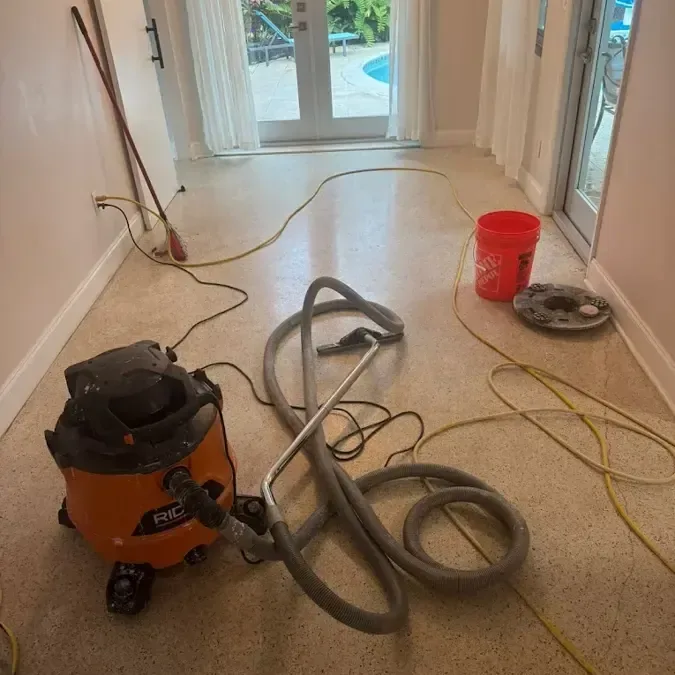
Lakewood is flat, and the city says its streets can take time to drain in a heavy downpour. The crew pumps water out of garages and ground-level rooms, cuts back soaked drywall, treats surfaces and dries the structure.
(888) 563-9619Pump out the storm water
First steps for storm and flash flood cleanup
Avoid deep water
Hidden electrical hazards make flooded rooms unsafe.
Raise belongings
Lift valuables and papers onto shelves or tables.
Protect power
Shut off circuits serving flooded areas if it is safe to do so.
Document first
Photograph the water level and wet items before cleanup.
Water that arrives with a storm counts as contaminated, since it carries soil, debris and sometimes sewage. Pumping and removing soaked porous materials come first, before they spread the problem.
What does storm and flash flood cleanup cost in Lakewood, CA?
A garage or a single room usually costs $3,500 to $7,000, several rooms affected cost $7,000 to $15,000, and a flood that reached most of the house costs $15,000 to $25,000+.
| Job size | Typical range | What it covers |
|---|---|---|
| Garage or single room | $3,500 to $7,000 |
|
| Several rooms | $7,000 to $15,000 |
|
| House-wide flooding | $15,000 to $25,000+ |
|
These are typical ranges, never a quote. Four things move the total most: the water category, the wet square footage, the material class and how soon drying began. The water damage cost calculator narrows it for your own loss.
How storm and flash flood cleanup is handled, stage by stage
Moisture gets mapped with meters and a thermal camera before a single fan is set, so the plan follows the readings and not the stains. The drying team pulls equipment only when materials test dry.
- I
Pump
Water is pumped out of garages and low rooms.
- II
Cut
Wet drywall and insulation are cut out.
- III
Treat
Surfaces get an antimicrobial application.
- IV
Dry
Dehumidifiers and fans stay on until the readings come back dry.
Why garages and low rooms come first
The city names garages and other ground-level areas as vulnerable, and it advises raising valuable items off the floor and reporting clogged storm drain catch basins to City Hall. Those steps matter before a storm, and the cleanup begins where the water settled.
- Standing water pumped from garage floors and wet stored items sorted
- Baseboards and insulation removed where soaked
- Drywall cut above the water height
- Surfaces cleaned and treated before drying
Storm season readiness
The city posted storm readiness notes for the 2026-27 El Niño season, a useful prompt to check gutters, drains and stored belongings before heavy rain.
After flooding, the dry-out follows the same plan as other losses: extract, remove, treat and dry, tracked with daily readings. See structural drying and dehumidification for the equipment side.
When the storm overwhelms drains, sewage can mix with the water, and the work shifts to sewage backup cleanup.
Storm and flash flood cleanup across Lakewood and nearby cities
Storm response covers ZIP 90712, 90713 and 90715, including homes near Del Amo Boulevard and Bellflower Boulevard, the Cherry Cove and Carson Park neighborhoods, the blocks around Rynerson Park, and ground-level rooms in apartment buildings.
The same service nearby: storm and flash flood cleanup in Cypress, Artesia, Hawaiian Gardens.
Related water damage services

Storm and Flash Flood Cleanup questions, answered
Is storm water safe to touch?
No. It can carry sewage, soil and chemicals, so contact should be limited until protective gear and treatment are in place.
What should leave a flooded garage first?
Papers, electronics and boxes, which is why the city advises raising valuables off the floor in garages and other ground-level areas.
Do clogged storm drains matter?
They can slow drainage on a flat street. The city asks residents to report clogged catch basins to City Hall.
Will insurance cover flood damage?
Whether flood damage is covered turns on your policy, and storm or flood losses are often treated differently from a pipe leak, so check with your insurer before repairs.
How is flood water different from a pipe leak?
Flood water is contaminated, so porous materials are usually removed instead of dried, which raises the scope and the cost.
How long does storm cleanup take?
Pumping and removal take a few days, and drying adds more. Readings decide when the structure is dry.
Clear the flood water from the home
Rain-soaked floors and walls keep absorbing contaminated water. The restoration team pumps, cuts and treats the affected rooms, then dries the structure with logged readings.
(888) 563-9619Pump and treat