Storm and Flash Flood Cleanup in Hawaiian Gardens, CA
Heavy rain can overwhelm storm drains and push water into garages and living rooms. The response team removes the water, takes out soaked materials, treats what stays and dries the structure until readings settle.
(888) 563-9619Storm water inside? Call now.
First steps for storm and flash flood cleanup
Stay out of deep water
Do not wade through water that may touch electrical outlets.
Document everything
Photograph the waterline and damaged belongings.
Lift valuables up
Move papers, photos and electronics to higher shelves or tables.
Report the loss
Tell your insurer and note any city assistance offered.
Flood water from the street is not clean. It carries dirt, debris and bacteria, so storm cleanup treats it as contaminated and removes more material than a simple leak would.
What does storm and flash flood cleanup cost in Hawaiian Gardens, CA?
A flooded garage or single room usually costs $3,500 to $7,000. Several rooms run $7,000 to $15,000, and most of a house reaches $15,000 to $25,000+.
| Job size | Typical range | What it covers |
|---|---|---|
| Garage or one room | $3,500 to $7,000 |
|
| Several rooms flooded | $7,000 to $15,000 |
|
| Most of the house | $15,000 to $25,000+ |
|
These are typical ranges, never a quote. Four things move the total most: the water category, the wet square footage, the material class and how soon drying began. The water damage cost calculator narrows it for your own loss.
How storm and flash flood cleanup is handled, stage by stage
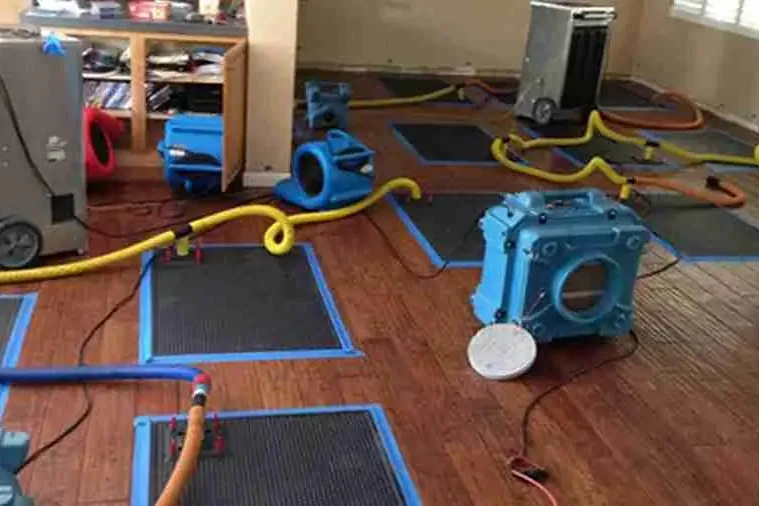
Moisture gets mapped with meters and a thermal camera before a single fan is set, so the plan follows the readings and not the stains. The drying team pulls equipment only when materials test dry.
- I
Pump
Storm water is removed before anything else is touched.
- II
Strip
Soaked porous materials come out.
- III
Treat
Antimicrobial goes on surfaces that stay.
- IV
Dry
Equipment runs until the readings are dry.
The January 1995 storm
According to newspaper reports at the time, a prolonged downpour on January 4, 1995 overwhelmed storm drains in Hawaiian Gardens and flooded about 124 homes. The worst flooding hit a 14 square block area west of Norwalk Boulevard and south of Carson Street, and many homes took on up to a foot of water.
Rain reached up to 5 inches in places within a few hours, more than the county's storm drain system was designed to handle. City officials declared a local state of emergency.
What storm cleanup includes
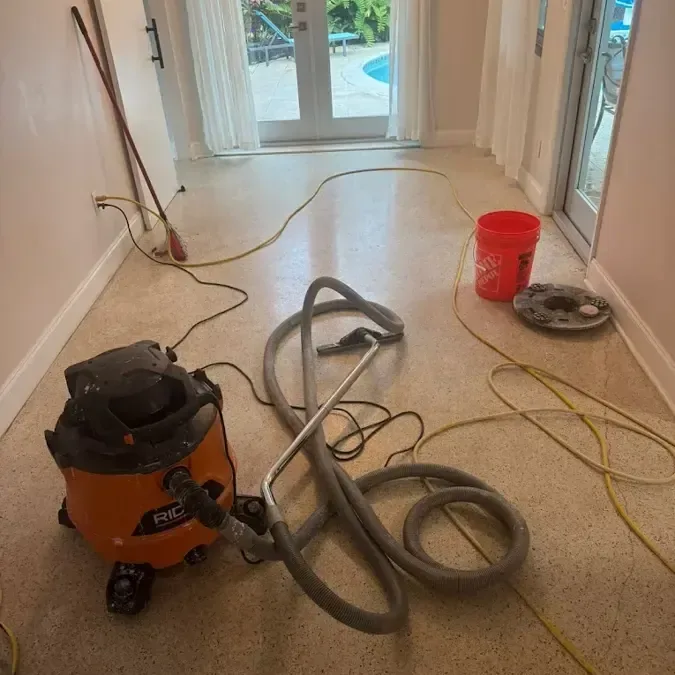
- Pumps and wet vacuums remove the water first.
- Soaked carpet, pad, insulation and lower drywall come out.
- Hard surfaces are treated with an antimicrobial.
- Structural drying runs until the readings match dry.
Debris and drainage
City officials said in 1995 that debris from flooded yards blocked some drains. After any heavy storm, clear leaves and trash from the gutter in front of your home when it is safe to do so. For the general method, see water extraction.
Sewage can mix with flood water, and when it does the work shifts to the stricter steps in sewage backup cleanup.
Storm and flash flood cleanup across Hawaiian Gardens and nearby cities
Storm cleanup covers ZIP 90716, with attention to the blocks west of Norwalk Boulevard and south of Carson Street, where the 1995 flooding hit hardest, plus Devlin Avenue, Pioneer Boulevard and the streets near City Hall.
The same service nearby: storm and flash flood cleanup in Cypress, La Palma, Cerritos.
Storm and Flash Flood Cleanup questions, answered
Is flood water safe to touch?
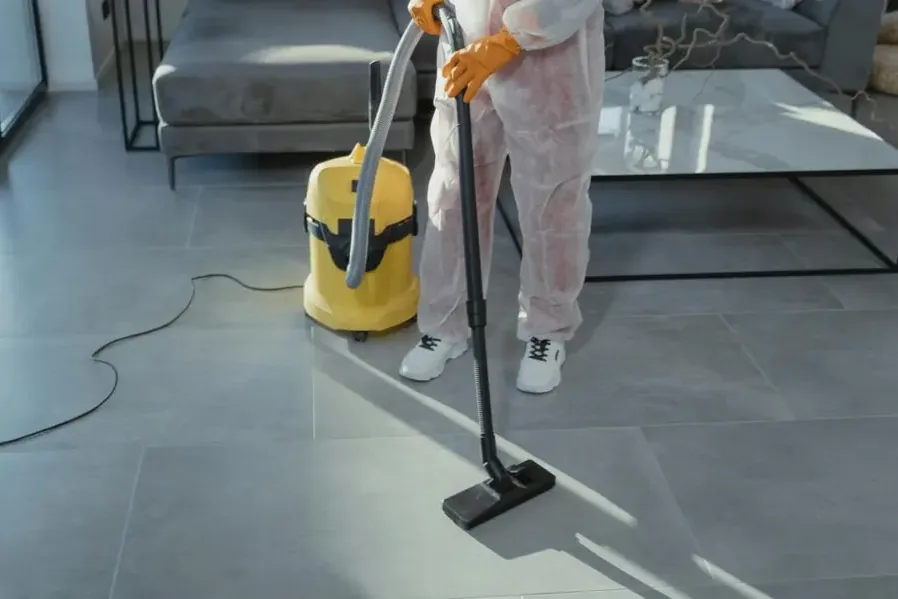
No. Street water carries bacteria and debris, so gloves, boots and careful removal are standard.
Will the carpet be thrown out?
Usually. Carpet and pad soaked by storm water are normally removed because they cannot be cleaned reliably.
Does flood cleanup include drying?
Yes. After extraction and removal, air movers and dehumidifiers run until walls and floors read dry.
Was the 1995 flood a county event?
Reports at the time said Los Angeles County was declared a federal disaster area after the January storm.
Does homeowners insurance cover flood water?
Policies differ, and many handle storm water and flood water in different ways. Ask your insurer early, and keep every receipt.
How much rain caused the 1995 flooding?
Newspaper reports at the time described rain of up to 5 inches in some places over a few hours, more than the county's storm drain system was built to handle.
What happens to debris after a storm?
Soaked carpet, pad and drywall are bagged and hauled out, and furniture is checked for damage. Yard debris near drains should be cleared when it is safe.
Storm water on your floors here?
Flood water carries dirt and bacteria into carpet and walls. The response team pumps it out, removes what is soaked and dries the rest.
(888) 563-9619Reach the storm crew