Structural Drying and Dehumidification in Hawaiian Gardens, CA
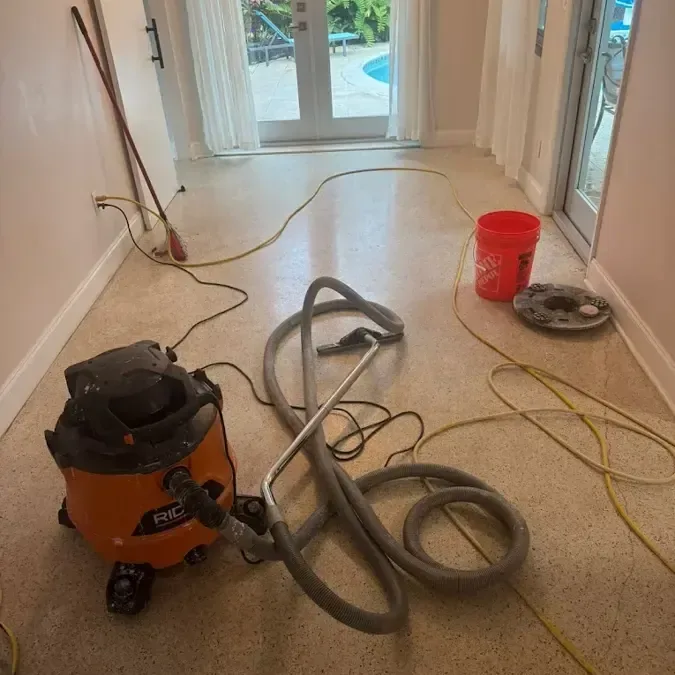
Water hides in wall cavities, subfloors and framing long after the surface looks dry. The drying team places air movers and dehumidifiers by moisture mapping, then checks readings each visit until the structure is dry.
(888) 563-9619Walls still damp? Call now.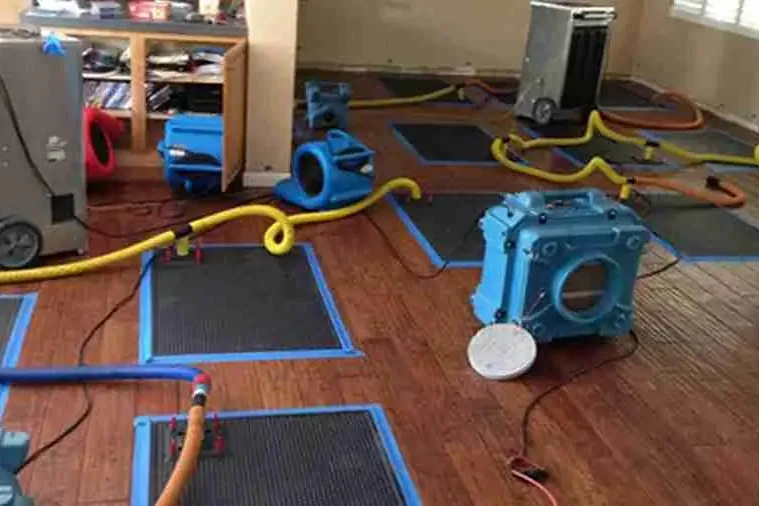
First steps for structural drying and dehumidification
Keep the doors closed
Closed rooms dry more evenly and hold heat for the equipment.
Leave equipment running
Do not unplug fans or dehumidifiers.
Empty the dehumidifier tank
Drain it if it fills, and let the crew know how often.
Note any new damp spots
Tell the crew if a stain reappears.
Surface drying is not structural drying. Framing, subfloor and wall cavities hold moisture that a towel never reaches, and a dehumidifier running without readings is only a guess.
What does structural drying and dehumidification cost in Hawaiian Gardens, CA?
Class 1 or 2 in one area costs $1,500 to $3,000. Class 3 in several rooms runs $3,000 to $6,000, and Class 4 reaches $6,000 to $9,000.
| Job size | Typical range | What it covers |
|---|---|---|
| Class 1 or 2, one area | $1,500 to $3,000 |
|
| Class 3, several rooms | $3,000 to $6,000 |
|
| Class 4, slab or hardwood | $6,000 to $9,000 |
|
These are typical ranges, never a quote. Four things move the total most: the water category, the wet square footage, the material class and how soon drying began. The water damage cost calculator narrows it for your own loss.
How structural drying and dehumidification is handled, stage by stage
Moisture gets mapped with meters and a thermal camera before a single fan is set, so the plan follows the readings and not the stains. The drying team pulls equipment only when materials test dry.
- I
Map
Moisture meters and a thermal camera show where the water went.
- II
Place
Air movers and dehumidifiers go in by class.
- III
Monitor
Readings are taken at every visit.
- IV
Release
Equipment leaves only when materials are dry.
Shared walls, shared moisture
Hawaiian Gardens has 527 attached single family homes alongside many multi unit buildings. Water that enters one home can travel into shared walls and neighboring units, so drying often reaches past the room that flooded.
How the work is planned
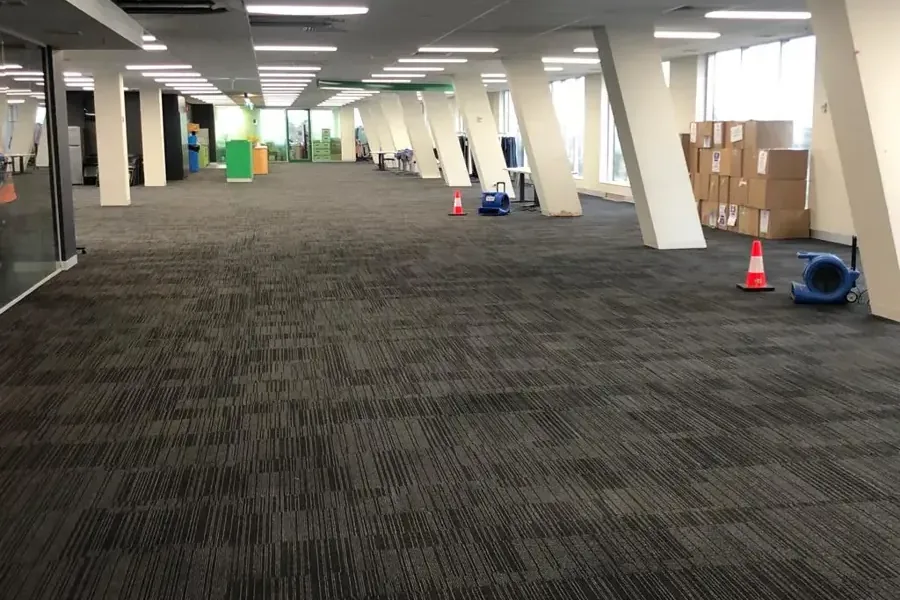
Equipment is chosen by water class, not by room size alone.
- Class 1 and 2 losses use air movers and an LGR dehumidifier.
- Class 3 losses add more equipment and cavity drying.
- Class 4 losses in slab or hardwood use desiccant units and mats.
- Psychrometric readings track the air as well as the materials.
Finished means dry
A job is done when readings match a dry reference. Equipment that comes out early leaves moisture behind, which is why water extraction and drying are tracked together, and why the burst pipe cleanup uses the same logs.
Mold becomes a concern if materials stay damp for 24 to 48 hours, which is why equipment goes in as soon as the water is out. Sealed walls, cabinets and flooring slow drying, so small openings are sometimes made to let air reach the cavity.
Equipment stays on until the readings say dry, even if the surface feels fine to the touch.
Structural drying and dehumidification across Hawaiian Gardens and nearby cities
Drying work covers ZIP 90716, from single homes to multi unit buildings in town, including the blocks near Pioneer Boulevard and Norwalk Boulevard, and the residential streets around Juan Avenue and Funston Avenue, attached or detached.
The same service nearby: structural drying and dehumidification in Cypress, La Palma, Cerritos.
Structural Drying and Dehumidification questions, answered
How long does structural drying take?
Most jobs take several days. Class and materials decide the length, and readings show when it is finished.
Why are so many machines needed?
Air movers move moisture off surfaces, and dehumidifiers pull it out of the air. Both are needed to dry framing.
Can the machines be turned off at night?
Equipment works best running continuously. The crew advises if anything can be paused.
What are water classes?
Classes 1 to 4 describe how much water was absorbed and how deeply, and they decide the equipment.
Can drying reach a neighbor's wall?
Moisture can pass through shared walls, so neighboring units may need readings too.
Why does a damp room smell musty?
Damp materials give off a stale odor. Drying them fully, with equipment running until readings are normal, is what removes it.
How is progress tracked?
The crew records temperature, humidity and material moisture at each visit, so the file shows the trend toward dry.
Still damp after the water was removed?
Surface dry is not dry. The drying team maps moisture, places equipment and reads the meters until the structure matches dry values.
(888) 563-9619Schedule the dry out