Storm and Flash Flood Cleanup in Artesia, CA
When heavy rain puts water in a garage, a kitchen or a hallway, the crew extracts it, cuts away soaked drywall and dries the structure in Artesia homes. The crew treats storm water as contaminated until the materials show otherwise.
(888) 563-9619Describe the storm damage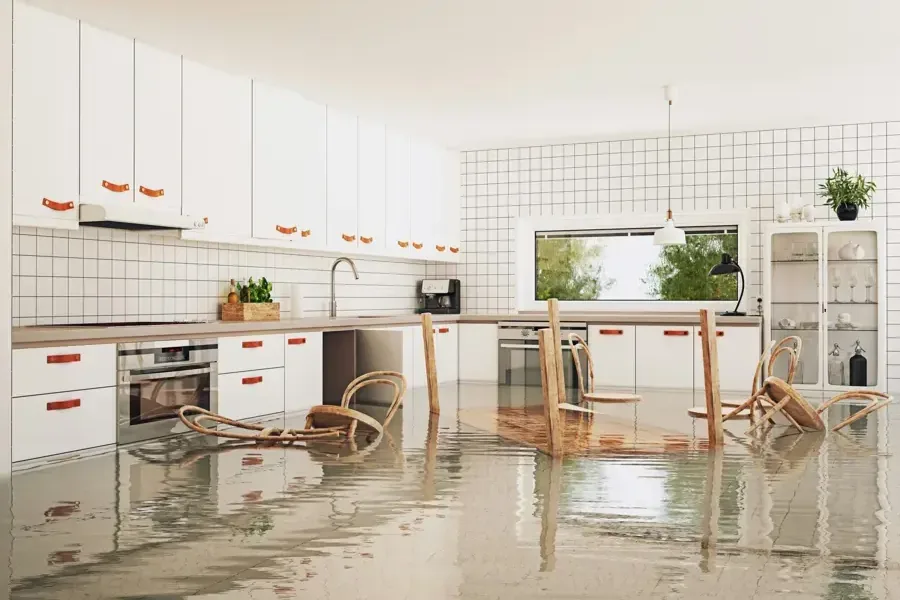
First steps for storm and flash flood cleanup
Stay out of standing water
Storm water can carry contaminants and hide electrical hazards.
Shut off power if wet
Turn off circuits to flooded rooms only if the panel is dry and reachable.
Move valuables up
Lift documents, electronics and small furniture onto higher surfaces.
Photograph the water mark
Record how high the water rose before anything is moved.
Rain that enters a home picks up dirt and contaminants from roofs, yards and drains, so the cleanup treats it as contaminated until the affected materials are removed or treated.
What does storm and flash flood cleanup cost in Artesia, CA?
Storm water jobs run $3,500 to $7,000 for a garage or one room, $7,000 to $15,000 across several rooms, and $15,000 to $25,000 or more when most of the house is affected.
| Job size | Typical range | What it covers |
|---|---|---|
| Garage or a single room | $3,500 to $7,000 |
|
| Several rooms | $7,000 to $15,000 |
|
| Most of the house | $15,000 to $25,000+ |
|
These are typical ranges, never a quote. Four things move the total most: the water category, the wet square footage, the material class and how soon drying began. The water damage cost calculator narrows it for your own loss.
How storm and flash flood cleanup is handled, stage by stage
Moisture gets mapped with meters and a thermal camera before a single fan is set, so the plan follows the readings and not the stains. The drying team pulls equipment only when materials test dry.
- I
Extract
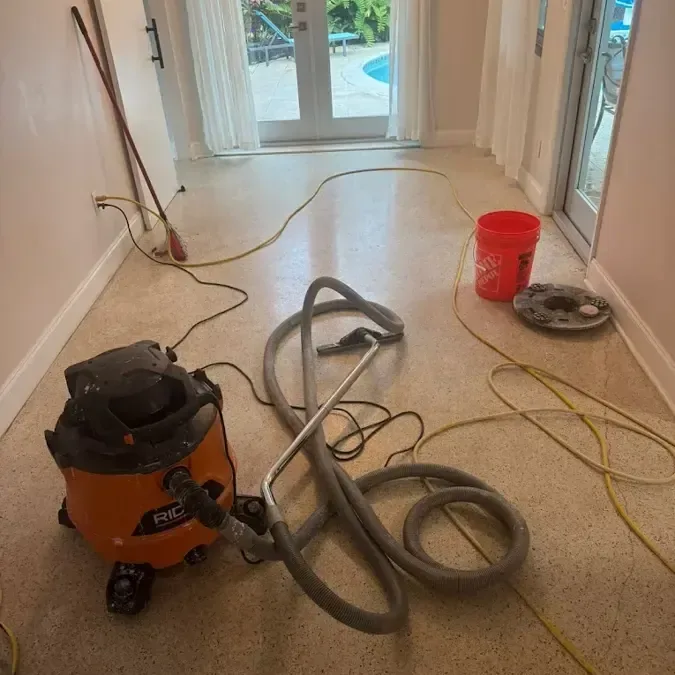
Standing water is removed from garages and low spots.
- II
Cut
Soaked drywall and insulation are removed above the high water mark.
- III
Treat
Antimicrobials go on surfaces that stay in place.
- IV
Dry
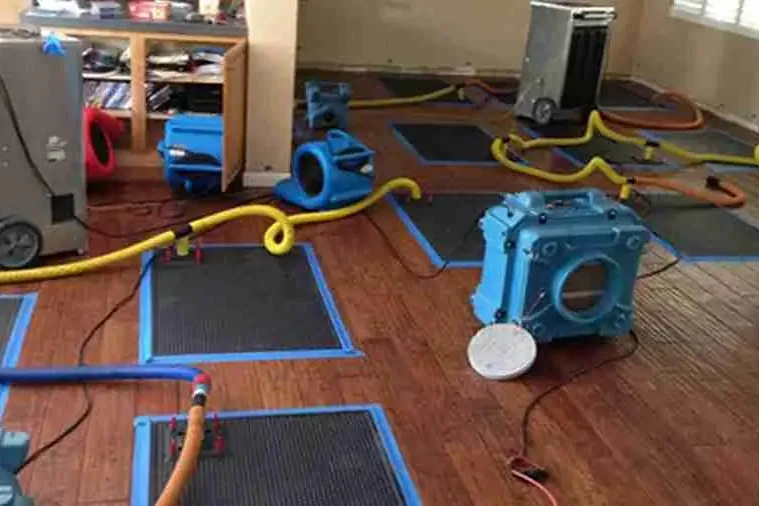
Equipment runs until readings match dry targets.
What local records show
The city's 2010 General Plan report maps it in FEMA Zone X, a non-special flood hazard area, and runoff drains to the Artesia-Norwalk storm drain, Coyote Creek and the San Gabriel River. A historical record also notes water on Pioneer Boulevard near Willis Street School on January 18, 1952. Those are facts of record, not a forecast, and indoor water usually enters through a roof, a garage door or a low doorway.
What the cleanup includes
Water is extracted, wet drywall is cut above the high water mark, insulation comes out, and carpet and pad are removed when storm water soaked them. Antimicrobial treatment follows, then structural drying takes over. Standing water is pulled out of the garage first because it spreads fastest across flat concrete.
- Garage floors and low rooms extracted first
- Baseboards and lower drywall opened
- Daily readings logged until the structure is dry
Storm and flash flood cleanup across Artesia and nearby cities
Storm cleanup covers ZIP 90701, including older homes off Clarkdale Avenue and Arkansas Street and the commercial blocks near Pioneer Boulevard, with extraction units and drying equipment sized to the amount of water involved.
The same service nearby: storm and flash flood cleanup in Cypress, Cerritos, Hawaiian Gardens.
Related water damage services
Storm and Flash Flood Cleanup questions, answered
Is storm water considered contaminated?
Usually yes. Water from roofs, yards and drains carries dirt and bacteria, so porous materials it soaked are typically removed and surfaces are treated with antimicrobial products.
What does the flood map say for the city?
The city's 2010 General Plan report maps it in FEMA Zone X, a non-special flood hazard area, and the city takes part in the National Flood Insurance Program. Rain can still enter through a roof or door.
Where does storm runoff drain?
In the city's report, runoff drains to the Artesia-Norwalk storm drain, Coyote Creek and the San Gabriel River. Indoor damage still depends on how rain gets into a home.
Does flood insurance cover storm water in the home?
The policy wording and whether the water counts as flood or rain decide that, so check with your own insurer.
How fast does storm water cleanup need to start?
As early as safely possible, because soaked drywall and carpet can support mold within 24 to 48 hours. Water extraction comes first, then drying.
Can a garage floor be dried after storm water?
Yes. Concrete is extracted, treated and dried with air movers and dehumidifiers, and stored items are moved.
Clear the storm water from the house
Tell the crew which rooms took on water and how deep it stood, so extraction pumps and drying equipment match the loss.
(888) 563-9619Report the storm damage