Water Extraction and Removal in Artesia, CA
The extraction crew pulls standing water out of carpet, pad and floors in Artesia homes and storefronts, then hands the wet structure to drying equipment before moisture can spread into the walls.
(888) 563-9619Talk to the extraction crew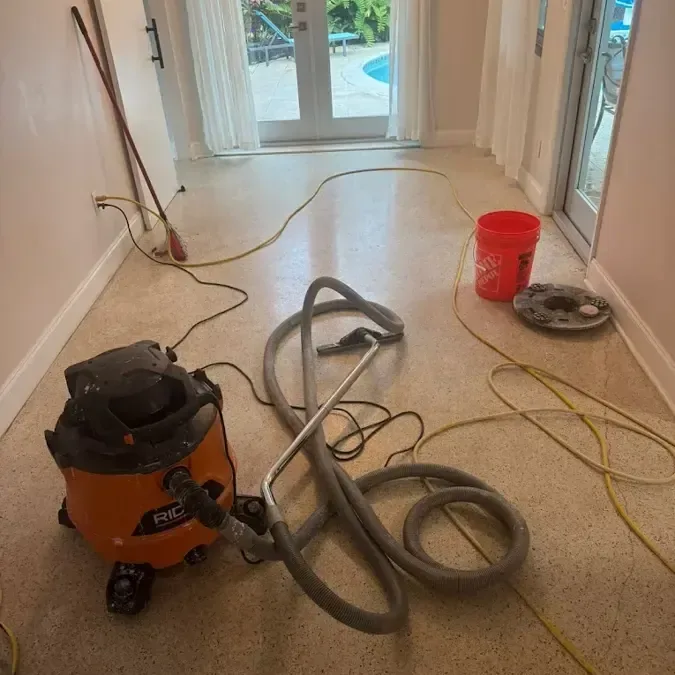
First steps for water extraction and removal
Stop the water
Close the shutoff valve or the main so nothing new reaches the floor.
Lift what you can
Block furniture legs and move rugs and electronics out of the wet area.
Avoid household vacuums
Standard vacuums are not built for water and can shock you.
Photograph the floor
Capture the water depth and wet materials before the crew starts.
Standing water is the first thing to remove, because every extra hour it sits it wicks into baseboards, wall bottoms and subfloors. Extraction decides how much of the home has to be opened later.
What does water extraction and removal cost in Artesia, CA?
Extraction runs $500 to $1,500 for one room of clean water, $1,500 to $3,000 across several carpeted rooms, and $3,000 to $4,500 once gray water or lifted planks appear.
| Job size | Typical range | What it covers |
|---|---|---|
| One room of clean water | $500 to $1,500 |
|
| Several carpeted rooms | $1,500 to $3,000 |
|
| Gray water or lifted planks | $3,000 to $4,500 |
|
These are typical ranges, never a quote. Four things move the total most: the water category, the wet square footage, the material class and how soon drying began. The water damage cost calculator narrows it for your own loss.
How water extraction and removal is handled, stage by stage
Moisture gets mapped with meters and a thermal camera before a single fan is set, so the plan follows the readings and not the stains. The drying team pulls equipment only when materials test dry.
- I
Locate
Moisture meters trace where the water traveled beyond the visible wet spot.
- II
Extract
Truck-mounted and portable units pull out standing water, and soaked pad is cut away.
- III
Treat
Gray water or contaminated areas get antimicrobial treatment before anything is dried.
- IV
Verify
Readings confirm the floor is ready for drying equipment and the next phase.
Removal comes before drying
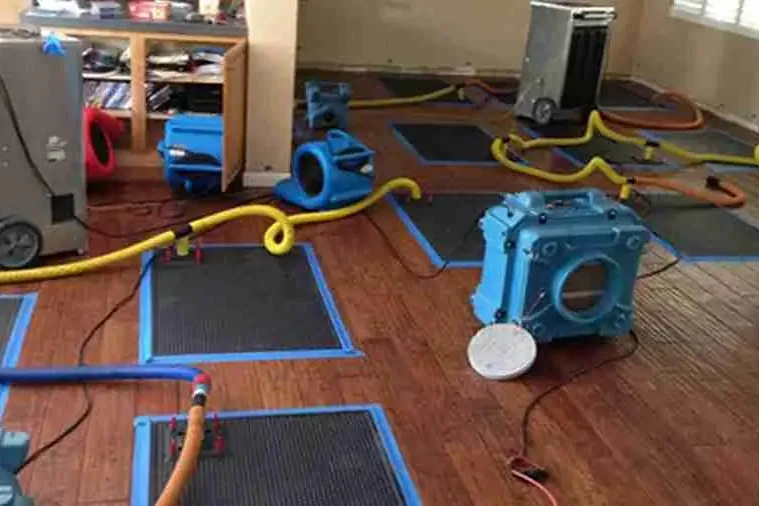
Air movers and dehumidifiers work on moisture in the air and in materials, not on a pooled floor. Until the bulk water is pulled out, the equipment only fights a source that keeps feeding it, and the whole job slows down.
- Truck-mounted units handle large floors and carpeted rooms
- Portable pumps reach closets, stairs and tight corners
- Pad that is soaked beyond saving is cut out and removed
- Furniture is blocked so wet carpet does not stain the legs
Where the water comes from
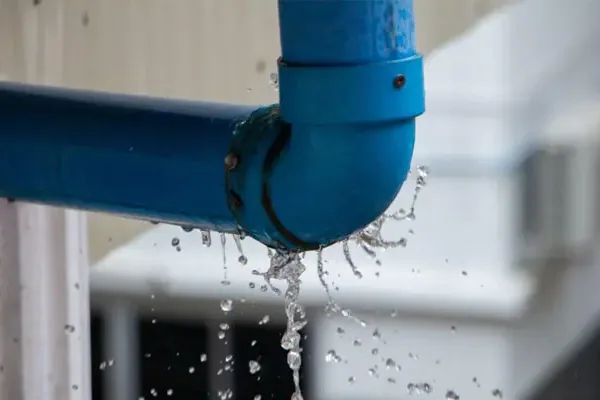
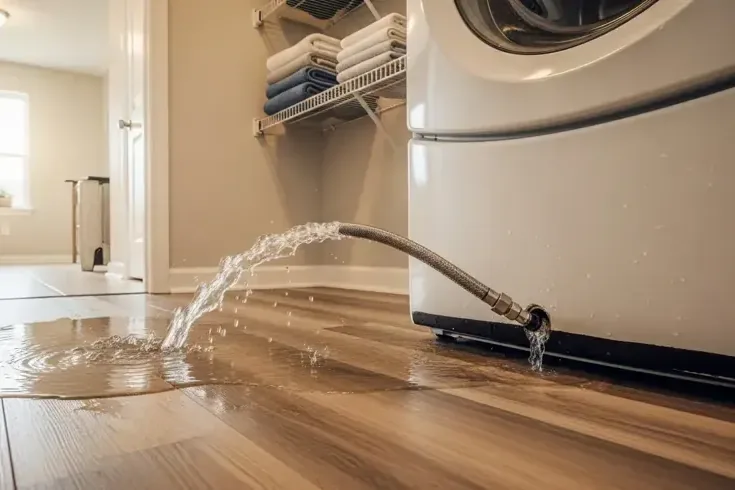
The city is mapped in FEMA Zone X in its 2010 General Plan report, and most indoor extraction here begins with a failed pipe, a leaking appliance or a roof leak. Whatever the source, the first job is stopping it and removing what spilled.
What the crew records
Before and after photos, the starting readings and the equipment used all go into a log. That record gives an adjuster the facts of the loss, and it shows when the floor is ready for the drying phase. A clean record also explains which materials were saved.
- Wet areas marked on a simple room map
- Photos of the water depth and the affected materials
- Readings taken before extraction and again after
- Notes on which materials were removed and why
Water extraction and removal across Artesia and nearby cities
The crew works across ZIP 90701, from older residential blocks near Clarkdale Avenue to storefronts and offices along Pioneer Boulevard, Little India and the Arkansas Street area, with larger units for big floors and portable pumps for tight rooms.
The same service nearby: water extraction and removal in Cypress, Cerritos, Hawaiian Gardens.
Water Extraction and Removal questions, answered
How soon should standing water be extracted?
As soon as the source is stopped. Water spreads into baseboards and wall bottoms quickly, and wet materials can support mold within 24 to 48 hours.
Can a household wet vacuum do the job?
It can handle a spill, not a soaked room. Truck-mounted and portable extractors move far more water and reach carpet and pad that a shop vacuum leaves wet.
Will the carpet be saved after extraction?
Often, when the water is clean and removed quickly. Pad that stays soaked usually comes out, and gray water changes the decision toward removal.
Does extraction include drying?
Extraction removes the bulk water. Structural drying follows with air movers, dehumidifiers and readings until the materials reach dry targets.
What if the water came from a sewage backup?
Contaminated water is handled under containment with protective gear, and soaked porous materials are removed. See sewage backup cleanup for that process.
Does the crew extract water from commercial floors?
Yes. Tile, carpet tile and polished concrete in suites and storefronts are extracted with larger units, then dried in phases so the business can reopen quickly.
Get the standing water out
Pumps and hoses are loaded once the crew knows the source, the rooms involved and how long the water has been sitting.
(888) 563-9619Talk about the water