Water Heater Leak Cleanup in Lakewood, CA
Lakewood households average 3.1 people, so a failed water heater disrupts several lives at once. The extraction crew removes the tank water, lifts wet flooring and dries the floor, baseboards and wall bottoms around the heater.
(888) 563-9619Start the heater leak cleanup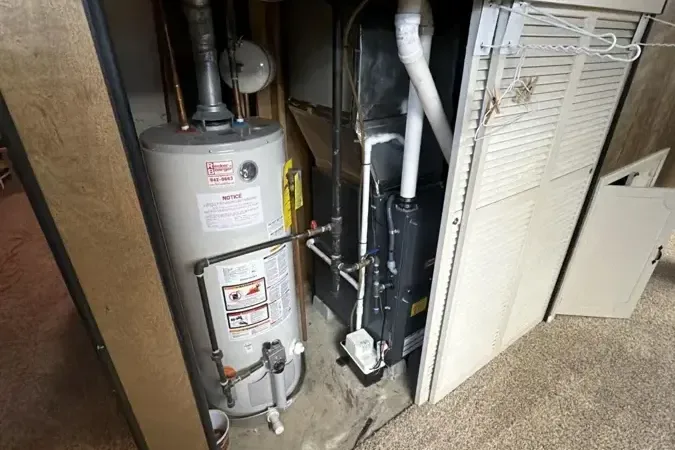
First steps for water heater leak cleanup
Shut off supply
Close the cold water valve to the tank and set the heater to off.
Mind electricity
Keep clear of wet outlets and cords near the tank.
Move items
Lift boxes, rugs and electronics off wet floors.
Photograph first
Record the tank, the leak path and every wet surface.
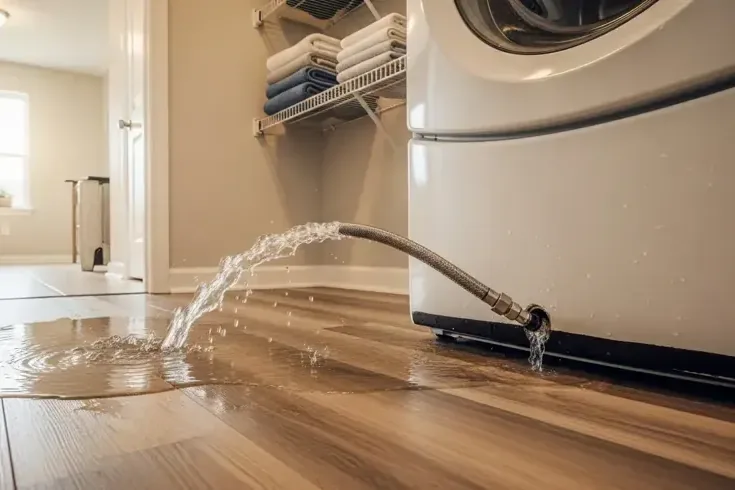
A water heater holds dozens of gallons, and when a tank splits or a fitting fails, all of it can reach the floor in a single event. The question is how far it spread before the leak was noticed.
What does water heater leak cleanup cost in Lakewood, CA?
Water heater leaks usually run $1,000 to $2,000 on one floor area, $2,000 to $4,500 when the floor and wall bottoms are wet, and $4,500 to $7,500 when several rooms are involved.
| Job size | Typical range | What it covers |
|---|---|---|
| One floor area only | $1,000 to $2,000 |
|
| Floor and wall bottoms | $2,000 to $4,500 |
|
| Several rooms | $4,500 to $7,500 |
|
These are typical ranges, never a quote. Four things move the total most: the water category, the wet square footage, the material class and how soon drying began. The water damage cost calculator narrows it for your own loss.
How water heater leak cleanup is handled, stage by stage
Moisture gets mapped with meters and a thermal camera before a single fan is set, so the plan follows the readings and not the stains. The drying team pulls equipment only when materials test dry.
- I
Extract
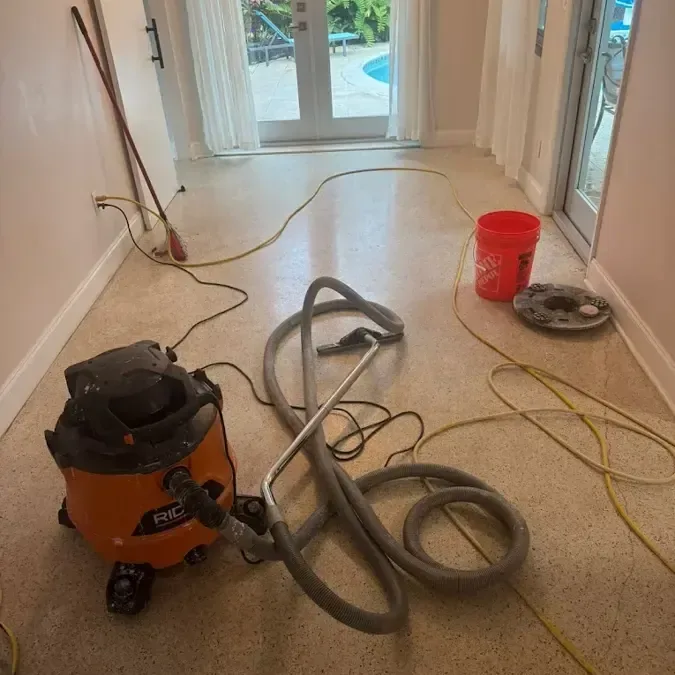
Standing tank water is pumped and vacuumed from the floor.
- II
Open
Baseboards come off and wet flooring edges are lifted.
- III
Dry
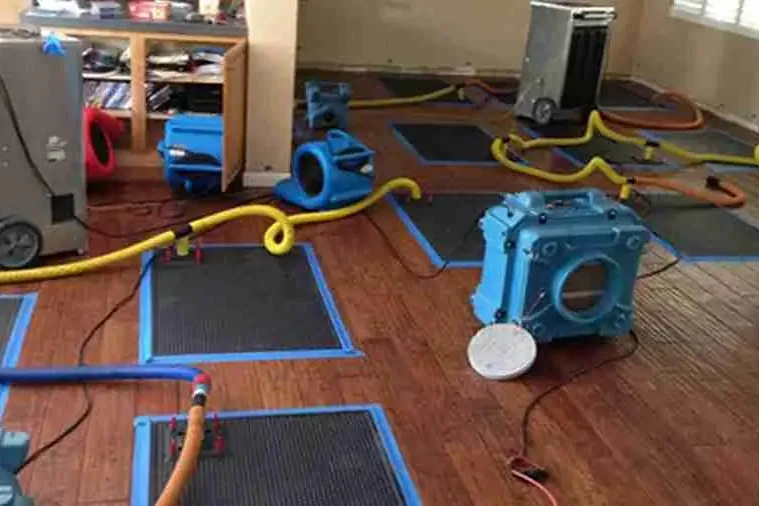
Air movers and dehumidifiers run across the wet zone.
- IV
Verify
Meters confirm dry readings before equipment leaves.
What the cleanup covers
The extraction crew pumps or vacuums the standing water first, then checks carpet, pad and flooring edges. Baseboards come off so air can reach the wall bottoms.
- Stored items moved off wet floors
- Carpet and pad kept or removed by water category
- Flooring lifted where water went underneath
- Drywall bases checked with moisture meters
Heater water is usually clean when it first leaks, so more materials can often be saved if drying starts early. See water extraction for the pumping stage.
Why a hidden leak costs more
Slow weeps at a drain valve or fitting can wet wall bottoms for weeks before a stain appears. A cold shower, rust streaks or a damp floor next to the heater are early signs worth checking before a larger failure.
Drying and records
Air movers and LGR dehumidifiers run until readings match dry standards, with moisture checked each visit. Photos and logs go into one file, which helps when the insurer looks at the loss. A leak from a washer or dishwasher follows a similar path, covered under appliance and supply hose leak cleanup.
- Readings logged for every wet surface
- Equipment pulled only at dry readings
- Receipts and photos kept together
Water heater leak cleanup across Lakewood and nearby cities
Water heater calls cover ZIP 90712, 90713 and 90715, from the neighborhoods near Del Amo Boulevard and Bellflower Boulevard to Carson Park, Mayfair and the blocks around Cherry Cove Park, in houses and apartment buildings alike.
The same service nearby: water heater leak cleanup in Cypress, Artesia, Hawaiian Gardens.
Water Heater Leak Cleanup questions, answered
How much water can a tank release?
A full tank holds a large volume, and a split seam or failed fitting can empty it onto the floor at once.
Is heater water clean?
Tank water is usually clean when it first leaks, but time and contact with flooring change that, so early drying helps.
Should the heater be replaced first?
Usually the plumber addresses the tank or fitting first, and the restoration team dries the area at the same time.
Does insurance cover a leaking water heater?
Coverage depends on your policy, and the tank itself may be treated differently from the water damage it caused, so ask your insurer.
How can a slow leak be spotted?
Look for rust at the base, a damp floor, stained baseboards or a puddle that returns after being wiped up.
Do wall bottoms need to come out?
If readings show wet drywall or insulation after the leak, the bottom section is cut so the cavity can dry.
Dry the floor before the walls soak
A split tank can move a lot of water into baseboards and flooring. The restoration team extracts, opens and dries around the heater and documents each step.
(888) 563-9619Start the heater cleanup