Appliance and Supply Hose Leak Cleanup in Lakewood, CA
Original Lakewood kitchens had double sinks and a garbage disposer, and today's washers, dishwashers and refrigerators add more hoses behind the cabinets. The crew extracts the water, removes kick plates and baseboards, and dries cabinet bases, flooring and wall bottoms.
(888) 563-9619Dry out after the leak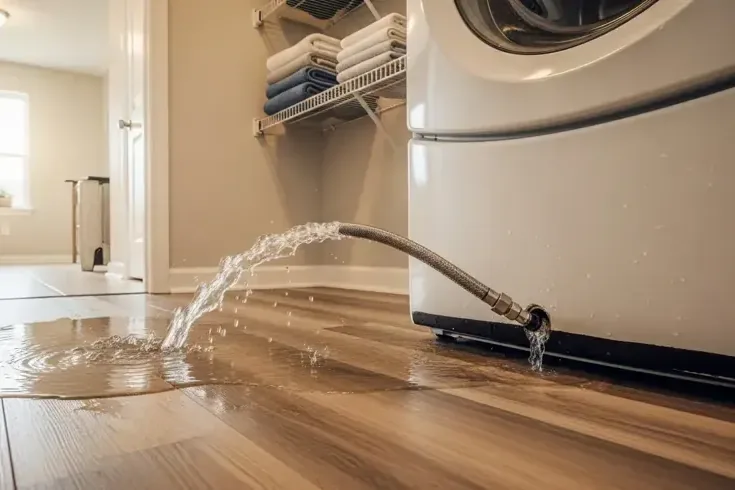
First steps for appliance and supply hose leak cleanup
Shut the valve
Turn off the supply valve behind the appliance or the main.
Unplug it
Unplug the appliance only if the floor and plug are dry.
Mop the surface
Remove standing water and lift items off wet flooring.
Photograph it
Capture the hose, valve and every wet area.
Appliance leaks are slow and quiet. A cracked washer hose, a loose dishwasher fitting or a refrigerator ice-maker supply pipe can drip behind a cabinet for weeks before a floor begins to cup.
What does appliance and supply hose leak cleanup cost in Lakewood, CA?
A laundry corner or single wet spot costs $1,000 to $2,500, a kitchen where cabinets got wet costs $2,500 to $5,000, and a hidden leak that ran long costs $5,000 to $8,000.
| Job size | Typical range | What it covers |
|---|---|---|
| Laundry corner or one spot | $1,000 to $2,500 |
|
| Kitchen with wet cabinets | $2,500 to $5,000 |
|
| Hidden leak, long duration | $5,000 to $8,000 |
|
These are typical ranges, never a quote. Four things move the total most: the water category, the wet square footage, the material class and how soon drying began. The water damage cost calculator narrows it for your own loss.
How appliance and supply hose leak cleanup is handled, stage by stage
Moisture gets mapped with meters and a thermal camera before a single fan is set, so the plan follows the readings and not the stains. The drying team pulls equipment only when materials test dry.
- I
Trace
The leaking hose or valve is found and photographed.
- II
Extract
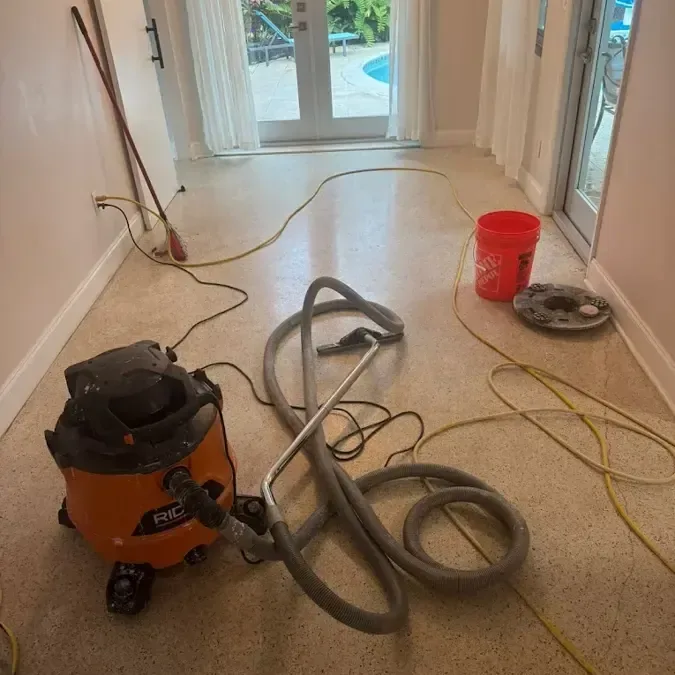
Water is vacuumed off floors and cabinet bases.
- III
Open
Kick plates and baseboards come off for airflow.
- IV
Dry
Equipment runs until cabinet and wall readings are dry.
Where the leaked water ends up
Water from a laundry or kitchen leak follows the lowest path, under flooring, into wall bottoms and across shared walls. Across the 3,264 units in larger buildings with five or more units, that path can lead to the neighbor below.
- Kick plates removed to open the cabinet base
- Flooring lifted where water traveled
- Wall bottoms checked behind the appliance
- Shut-off valves and hoses photographed
Hoses worth replacing
Rubber washer hoses and old shutoff valves are a common failure point, and braided replacements cost little. Peeking behind the washer and dishwasher once a year catches many leaks early.
Drying and documentation
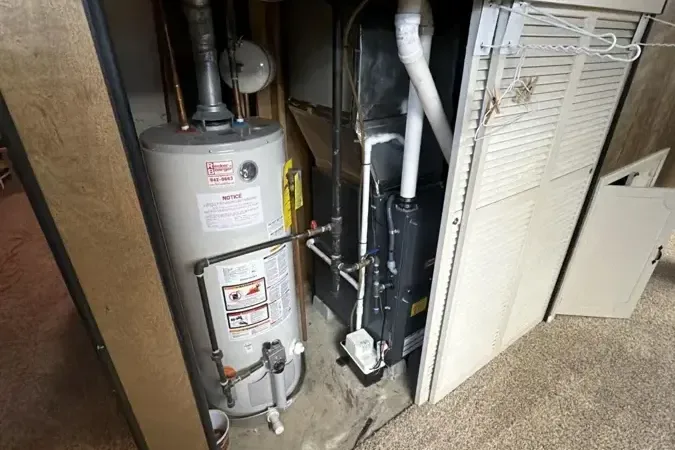
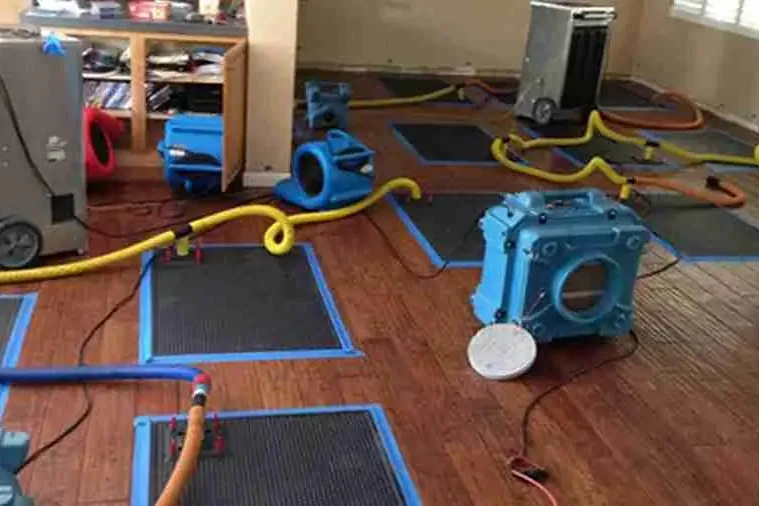
After the water extraction pass, air movers and dehumidifiers dry cabinet bases, flooring and wall bottoms, and moisture is read at each visit. A failed tank follows a similar path, covered under water heater leak cleanup.
- Moisture readings at each wet surface
- Photos of the source and the damage
- A list of materials removed and why
Appliance and supply hose leak cleanup across Lakewood and nearby cities
Appliance leak calls cover ZIP 90712, 90713 and 90715, including houses near Bellflower Boulevard and Del Amo Boulevard, apartment buildings around Carson Street, and the Mayfair, Imperial Estates and Cherry Cove neighborhoods and Rynerson Park.
The same service nearby: appliance and supply hose leak cleanup in Cypress, Artesia, Hawaiian Gardens.
Appliance and Supply Hose Leak Cleanup questions, answered
Which appliances leak most often?
Washers, dishwashers, refrigerators with ice makers and water heaters are the usual sources, often through a hose or valve.
Is a wet cabinet base salvageable?
Often yes when the leak is caught early and the base is dried with airflow, though swollen particleboard may need replacement.
Will my neighbor be affected?
In multi-unit buildings, water can travel through floors and shared walls, so adjacent units are checked and documented.
Does insurance cover a hose leak?
Coverage depends on your policy and on whether the leak was sudden, so ask your insurer and keep photos, bills and readings.
How long can a hidden leak run before damage shows?
Often weeks, since the water stays behind cabinets or under flooring, which is why cupping floors and musty smells are worth acting on.
Should the appliance be moved?
It is usually pulled out so the floor and wall bottom can be reached, and it goes back only after the area is dry.
Dry the cabinet base before it swells
Washer, dishwasher and refrigerator leaks hide behind cabinets and under flooring. The restoration team traces the source, extracts and dries every affected surface.
(888) 563-9619Start the appliance dry-out