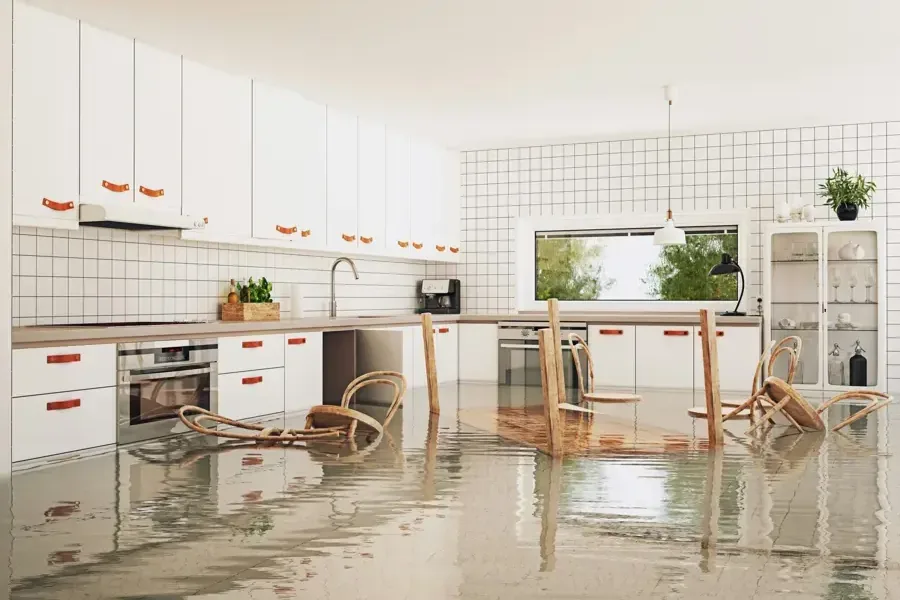
On January 4, 1995, a prolonged downpour overwhelmed storm drains in Hawaiian Gardens and flooded about 124 homes. City officials called it the worst flooding in decades, and it remains the clearest local example of what street water does when drains cannot keep up.
Key takeaways
- The January 4, 1995 flood was storm drain overflow, with about 124 homes flooded after a prolonged downpour.
- The worst water hit an area west of Norwalk Boulevard and south of Carson Street, where many homes took on up to a foot.
- Street water carries soil and debris, so it is handled as contaminated water, not clean water.
- Extraction comes first, then removal of porous materials, then structural drying with moisture readings.
- Ground floor apartments and shared walls need extra attention because water moves between units.
What happened on January 4, 1995
Rain reached up to 5 inches in some places in a few hours, more than the county's storm drains were designed to handle. Water backed up in the streets and moved into homes.
The most severe flooding covered a 14 square block area west of Norwalk Boulevard and south of Carson Street. The city declared a local state of emergency, and Los Angeles County was later declared a federal disaster area.
The federal declaration opened grants and low interest loans to residents, and the city offered grants of up to $2,000 to help needy residents repair storm damage.
- About 124 homes flooded.
- Many homes around Norwalk Boulevard and Devlin Avenue took on up to a foot of water.
- The 34 ground floor apartments at a senior citizens housing complex in the flooded area were damaged.
- City officials called it the worst flooding to hit the city in decades.
Why storm drain overflow is not a burst pipe
A burst pipe sends clean water from inside the home. Storm drain overflow sends street water from outside, and it carries soil, litter, oil and whatever else the rain washed off paved surfaces.
That is why the cleanup treats it as contaminated water. Carpet, pad and the bottom of drywall that soaked up street water are usually removed instead of dried in place.
The 1995 event was not river flooding. It was a storm that outran the drains.
First steps when street water enters a home
Safety before anything else
Street water can hide hazards, and it can reach outlets and appliances.
- Stay out of standing water until power to that area is off.
- Keep children and pets out of the water.
- Do not run household fans or vacuums on wet floors.
- Wear boots and gloves for any contact with the water.
Protecting what can be moved
Lift furniture, bags and electronics onto dry surfaces if it is safe to do so. Photograph how high the water reached, the rooms and the damaged belongings before anything is moved.
Do not wait for the street to drain. Water that sits in a home soaks deeper into flooring and wall bottoms with every hour.
What the extraction crew does
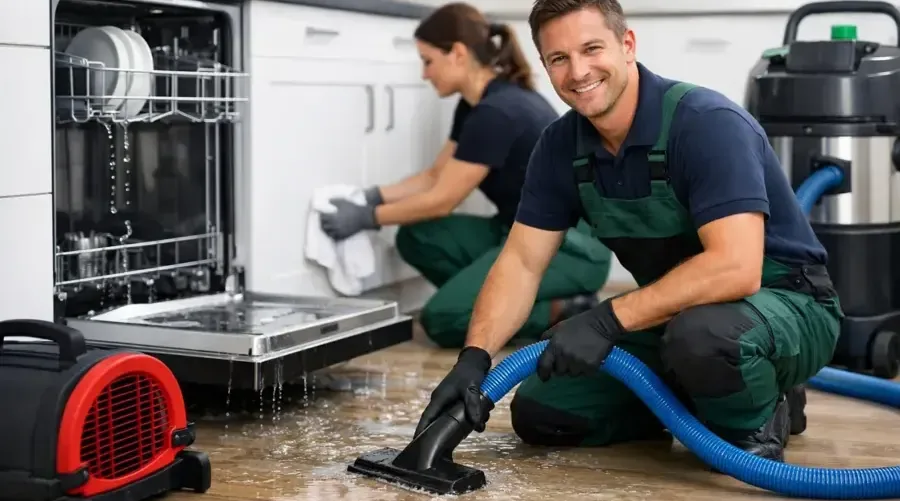
Water extraction in a storm loss starts at the lowest point and works outward. Pumps and extractors remove standing water first, so less of it soaks into the floors.
Once the surface water is gone, the crew removes carpet, pad and any drywall the water wicked into. Hard surfaces are cleaned and treated before drying equipment goes in.
Speed matters here because wet drywall and flooring start to break down within a day or two. Crews work room by room, and the order follows where the water is deepest.
- Standing water pumped out first.
- Carpet and pad removed when street water soaked them.
- Wet drywall cut above the height the water reached.
- Hard floors cleaned and treated.
- Items that cannot be cleaned are bagged and removed.
Drying and readings after storm water
Drying starts after the contaminated materials are out. Air movers and dehumidifiers run, and moisture meters track floors, wall bottoms and cabinet bases.
The storm and flash flood cleanup ends on dry readings, not on a calendar. Rooms that read dry can be rebuilt.
Structural drying matters even more where walls are shared, because water can pass through a wall into the next unit.
Readings are logged each day for every wet area. When a room meets the dry standard, the equipment moves to the next wet room until the whole home is done.
Ground floor units and shared walls
The 34 ground floor apartments hit in 1995 show how a flood works in a multi unit building. Water enters at ground level, so upper floors stay dry while the lower units absorb the loss.
The city has 834 units in buildings of five or more units and 364 in buildings of two to four units. The 2010 Census counted 55.7 percent of occupied homes as rented, so many households deal with a property manager as well as a cleanup crew.
- Report the loss to the property manager in writing.
- Photograph the damage and how high the water reached.
- Move belongings out of wet areas.
- Ask which rooms the drying crew will treat and when readings will be taken.
Getting ready before the next heavy rain
No one can stop a storm, but a short list of habits changes how a home fares when street water rises. The goal is to keep valuable items high and to know what to do in the first hour.
A household with a plan loses less, and a cleanup crew has a clearer picture when it starts.
- Keep important papers, electronics and keepsakes off the floor.
- Photograph each room now, so there is a record of how it looked before a loss.
- Know where the water shutoff and the electrical panel are.
- Keep boots, gloves and a flashlight in an easy place.
- Clear leaves and debris from the curb and driveway before heavy rain.
- Save the contact for an extraction crew where everyone can find it.
Questions
Was the 1995 flooding river flooding?
No. It was storm drain overflow after a prolonged downpour, with rain reaching up to 5 inches in some places in a few hours.
Is storm water in a home treated as clean water?
No. Street water carries soil and debris, so it is handled as contaminated water and porous materials are usually removed.
Should a household wait for the water to drain on its own?
Waiting lets water soak into flooring and walls. Extraction should start as soon as it is safe, because wet materials begin to break down within 24 to 48 hours.
What if only an entry or utility room is wet?
A wet entry or utility room still needs extraction and a moisture check, since water can wick into walls that border living space.
Does drying stop when the floor feels dry?
No. Moisture meters measure floors and wall bottoms, and drying ends only when readings meet the dry standard.
What happens to belongings that touched street water?
Hard items can often be cleaned and treated. Soft goods such as upholstered furniture, mattresses and rugs that soaked up street water are usually discarded, because they cannot be made safe.