Ceiling Leak Water Damage in Lakewood, CA
Lakewood counts 3,264 units in buildings with five or more units and 378 in buildings of two to four units, and a ceiling leak often starts in the unit above. The crew finds where the water entered, cuts out the wet section and dries the ceiling and everything beneath it.
(888) 563-9619Trace the ceiling leak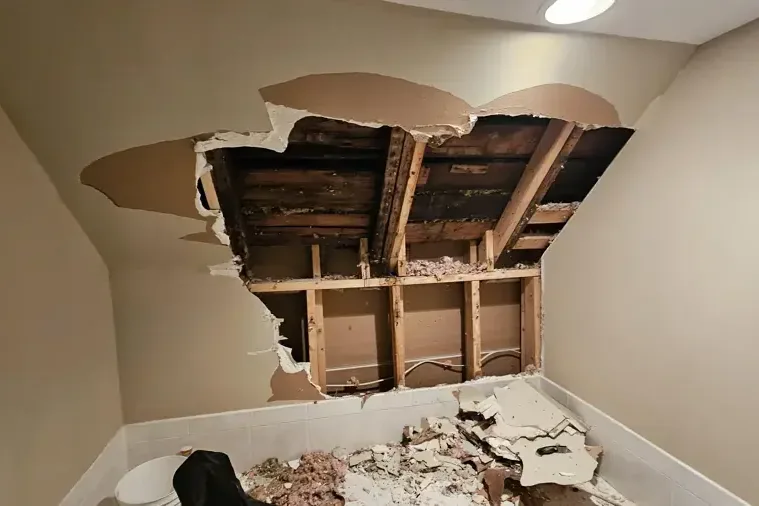
First steps for ceiling leak water damage
Catch the water
Set a bucket under the drip and cover furniture below.
Stay clear
Avoid standing under a sagging ceiling or near wet light fixtures.
Shut off supply
If the source is plumbing, close the water valve.
Photograph it
Record stains, sags and anything visible in the unit above.
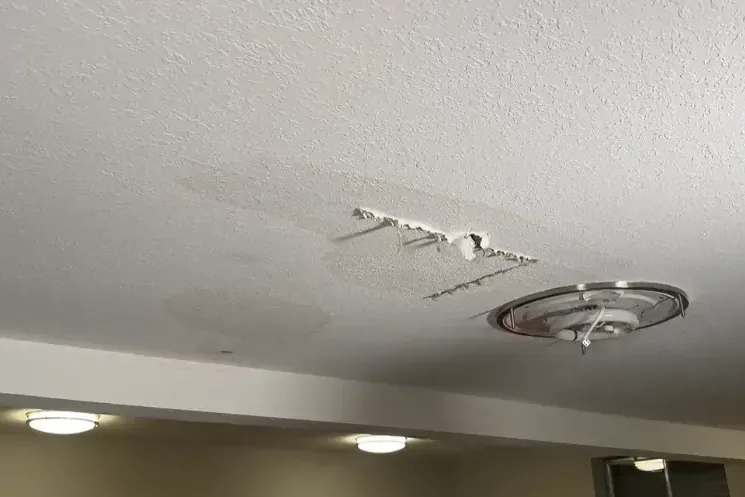
A stain overhead is only the visible end of a hidden path. Water came from a roof, a supply pipe, an air conditioner pan or a neighbor's fixture, and it has already soaked insulation and drywall on the way down.
What does ceiling leak water damage cost in Lakewood, CA?
Ceiling leaks run $1,200 to $2,500 for one ceiling section, $2,500 to $5,000 when walls and flooring below are wet, and $5,000 to $8,000 for a collapse or a leak that reached the unit below.
| Job size | Typical range | What it covers |
|---|---|---|
| One stained ceiling area | $1,200 to $2,500 |
|
| Ceiling plus walls below | $2,500 to $5,000 |
|
| Collapse or neighbor below | $5,000 to $8,000 |
|
These are typical ranges, never a quote. Four things move the total most: the water category, the wet square footage, the material class and how soon drying began. The water damage cost calculator narrows it for your own loss.
How ceiling leak water damage is handled, stage by stage
Moisture gets mapped with meters and a thermal camera before a single fan is set, so the plan follows the readings and not the stains. The drying team pulls equipment only when materials test dry.
- I
Trace
Meters and thermal imaging follow the wet drywall to its source.
- II
Open
Stained, sagging or soaked sections are cut out.
- III
Dry
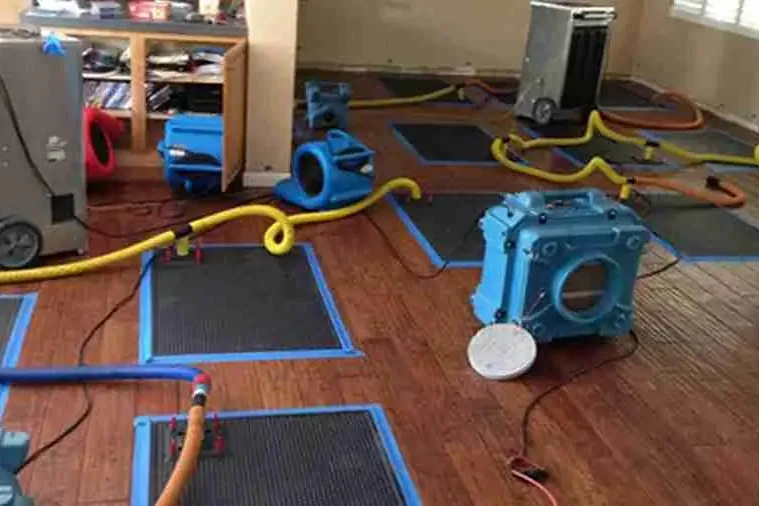
Fans and dehumidifiers work through joist bays and the walls beneath.
- IV
Check
Rooms below are scanned before anything is closed up.
Finding the source first
Moisture meters and thermal imaging follow the wet drywall back toward its origin. In multi-unit buildings the source is often a bathroom, kitchen or laundry in the unit above, so neighbors and building managers get involved early.
- Sagging sections cut out and bagged
- Insulation above the ceiling removed if wet
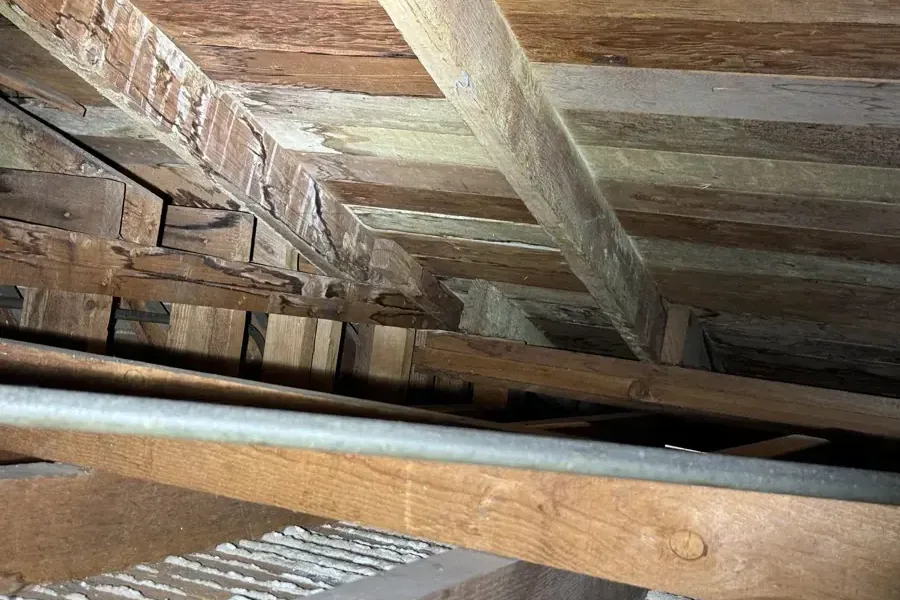
- Joist bays opened for airflow
- Wall bottoms below checked for wicking
Waiting for a stain to dry on its own leaves damp framing behind the paint.
Shared ceilings
In two-to-four-unit buildings and larger complexes, shared ceilings and floors let a leak cross into the home below. The crew documents each affected unit so owners, tenants and insurers can sort out responsibility.
Drying the opening
Once the wet section is cut out, air movers and dehumidifiers dry the joist bays and the walls beneath, and readings in the bays and wall bottoms confirm when finish work can begin. Water that came through roofing is covered under roof leak water damage, and water from an air handler under AC and condensate leak cleanup.
Ceiling leak water damage across Lakewood and nearby cities
Ceiling leak calls cover ZIP 90712, 90713 and 90715, including apartment buildings along Bellflower Boulevard and Carson Street, the Imperial Estates and Mayfair neighborhoods, and homes near Rynerson Park and Del Valle Park.
The same service nearby: ceiling leak water damage in Cypress, Artesia, Hawaiian Gardens.
Related water damage services
Ceiling Leak Water Damage questions, answered
Why does a dry-looking stain still matter?
Water may have stopped, but the framing above can stay damp, so the stain is worth checking with a moisture meter.
Should a sagging ceiling be opened?
Yes. A bulge holds water and can collapse, and cutting it open releases the water and lets the cavity dry.
Who is responsible when a leak comes from upstairs?
It depends on the building's ownership and lease terms, so document everything and notify the owner or manager and your insurer.
Can insulation be left in place?
Wet insulation holds moisture against the drywall and framing, so affected sections are removed and replaced.
Does the paint need to be redone?
After drying, textured or painted surfaces are repaired and repainted by a contractor, since drying work does not cover finish repairs.
How long does a ceiling take to dry?
Many ceiling leaks dry in three to five days, with moisture readings in the joist bays confirming the finish.
Stop the sag before it falls
Ceiling leaks hide wet framing behind clean paint. The restoration team follows the water to its origin, opens the damp section and dries the units around it.
(888) 563-9619Open and dry the ceiling