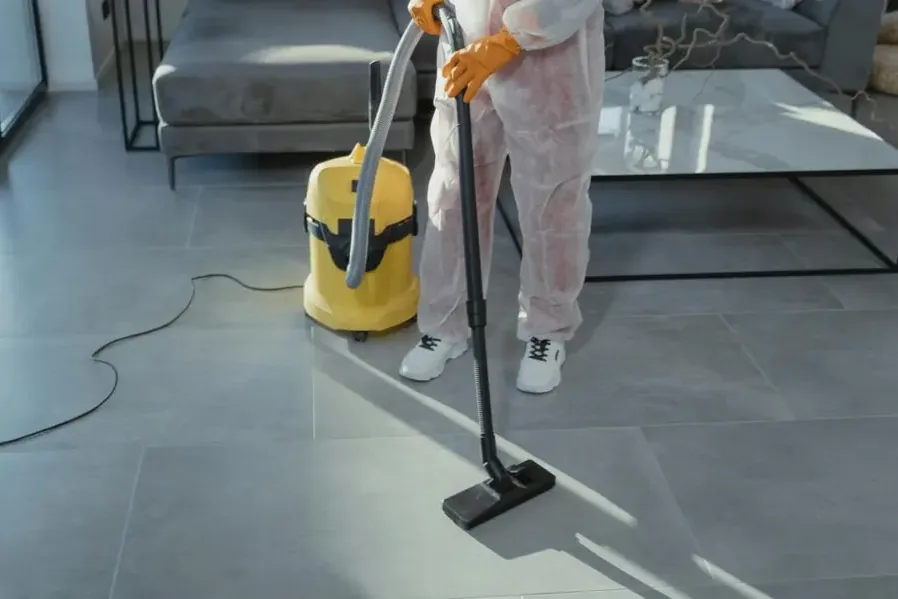
A sewage backup turns the lowest drain in a home into a source of contaminated water. In Lakewood, the city says homeowners are generally responsible for the sewer lateral, and a county district lists the city among the places it serves.
Key takeaways
- The city says homeowners are generally responsible for repairs to the sewer lateral, the pipe that runs from the home to the main sewer.
- The Los Angeles County Consolidated Sewer Maintenance District lists Lakewood and does mainline cleaning, camera inspection, emergency repair and overflow response.
- A sewage backup is contaminated water whichever pipe the blockage is in.
- Porous materials that touched sewage are removed and bagged, and what stays is cleaned and treated.
- Stop using water in the home until the blockage is cleared.
The lateral and the main are different pipes
A sewer lateral is the pipe that carries waste water from the home to the main sewer under the street. The city says homeowners are generally responsible for repairs to it.
The main is the larger sewer pipe the lateral connects to. The Los Angeles County Consolidated Sewer Maintenance District lists Lakewood among the cities it serves.
A blockage can sit in either pipe, and the first sign inside the home looks the same.
Signs of a sewage backup
A backup usually shows up at the lowest fixture in the house, because that is where waste water finds the nearest exit.
Early signs are easy to mistake for a simple clog. When two fixtures act up at once, the problem is usually past the individual drain and into the lateral or the main.
The housing mix matters too. Lakewood has 22,708 single family detached homes and 3,264 units in buildings of five or more units, and in a multi unit building a backup can reach a neighbor on the same drain.
- Slow drains in more than one fixture.
- Gurgling from toilets or tubs when water runs elsewhere.
- Water or waste at the lowest drain, such as a shower, tub or floor drain.
- A sewage smell near drains or in a bathroom.
- Water rising in a tub or shower when the washer drains.
First steps when waste water rises
Protect people
Sewage carries bacteria and viruses, so the first job is keeping people out of it.
- Stop using sinks, toilets, showers and the washer.
- Keep children and pets out of the area.
- Avoid touching the water, and wear gloves and boots if contact cannot be avoided.
- Do not run fans or use a household vacuum on the wet area.
Call the right people
A plumber locates and clears the blockage and checks the lateral. The cleanup crew handles the interior, because sewage is not a job for towels and household cleaner.
A plumber can tell whether the blockage sits in the lateral or in the main, and the county district lists sewer overflow response among its services. Photographs of the damage help every step that follows.
Why every backup is treated as contaminated
Water from a backup is classed as Category 3, the most contaminated category, whichever pipe the blockage is in. The pipe does not change what the water carries.
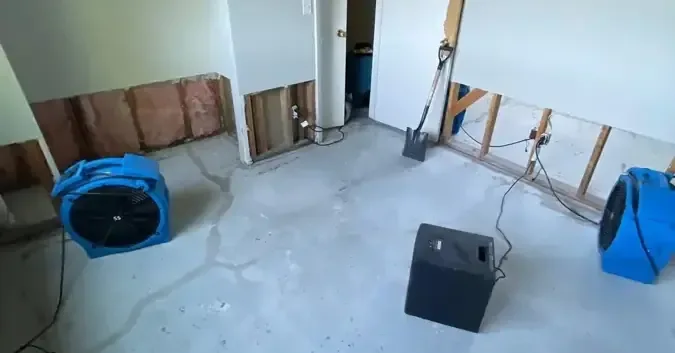
Porous materials that soaked it up, such as carpet, pad and the bottom of drywall, cannot be cleaned in place. They are removed and bagged.
Pipes with decades of service are more likely to have cracks, roots or sags, and about 83.7 percent of the housing stock was built before 1970. That is a reason to take slow drains seriously.
- Carpet and pad that touched sewage come out.
- Drywall and insulation that wicked it up come out.
- Hard surfaces are cleaned and treated.
- Air scrubbing with HEPA filters reduces airborne particles.
What the cleanup involves
Containment and extraction
Crews seal off the affected area, then extract the contaminated water with equipment kept apart from clean rooms. Sewage backup cleanup follows a set order so contamination does not spread.
Air scrubbers with HEPA filters run during the work, and the area stays sealed until readings and visual checks pass.
Removal, treatment and drying
After removal, surfaces are cleaned and treated with antimicrobial products and the air is filtered. Water extraction and drying then bring the structure to a dry standard, tracked by daily readings.
Flooring and drywall go back only after the readings are clean and dry.
What happens to belongings
Hard items such as plastic bins, tools and sealed furniture can often be cleaned and treated. Soft goods that touched sewage, including rugs and stuffed furniture, are usually discarded.
A list with photographs of anything removed makes the later rebuild simpler.
Who does what in a backup
Sorting out which pipe failed matters for the plumbing repair, but it does not change the interior cleanup. The same safety steps apply either way.
Photographs of the water, the affected rooms and any visible blockage help the plumber, the district and the cleanup crew. Notes on when the first signs appeared help as well.
- The homeowner arranges repairs to the lateral, as the city describes.
- A plumber clears the blockage and inspects the pipe.
- The county district lists mainline cleaning, camera inspection, emergency repair and overflow response among its services.
- The cleanup crew handles the interior work and the structural drying that follows.
Preventing the next backup
Many backups trace to what goes down the drain or to roots in an old pipe. A few habits and one camera inspection can lower the odds.
- Keep grease, wipes and paper towels out of toilets and drains.
- Run hot water after washing greasy dishes.
- Watch for slow drains and fix them before they become backups.
- Ask a plumber for a camera inspection of the lateral if backups repeat.
Questions
Is a sewage backup in Lakewood the homeowner's problem or the county's?
It depends on where the blockage is. The city says homeowners are generally responsible for the lateral, and the county district lists mainline cleaning among its services. A plumber can find which pipe is blocked.
Can household bleach clean up sewage?
No. Bleach and towels do not remove contamination from porous materials, and mixing chemicals can create hazards. Sewage cleanup uses containment, protective gear and removal of affected materials.
How long should a household stay out of the affected rooms?
Affected rooms should stay closed off until cleanup is complete and the area is dry. People with health concerns should stay clear of the area.
What does camera inspection show?
A camera sent through a sewer pipe shows cracks, roots or blockages. The county district lists camera inspection of mains among its services, and a plumber can inspect a lateral the same way.
Does all flooring have to be removed?
Porous flooring such as carpet and pad that touched sewage is removed. Tile and sealed hard surfaces can usually be cleaned and treated.
Can a backup reach other units in an apartment building?
Yes. Units on the same drain can see water at their lowest fixtures, so a report to the property manager should go in right away.