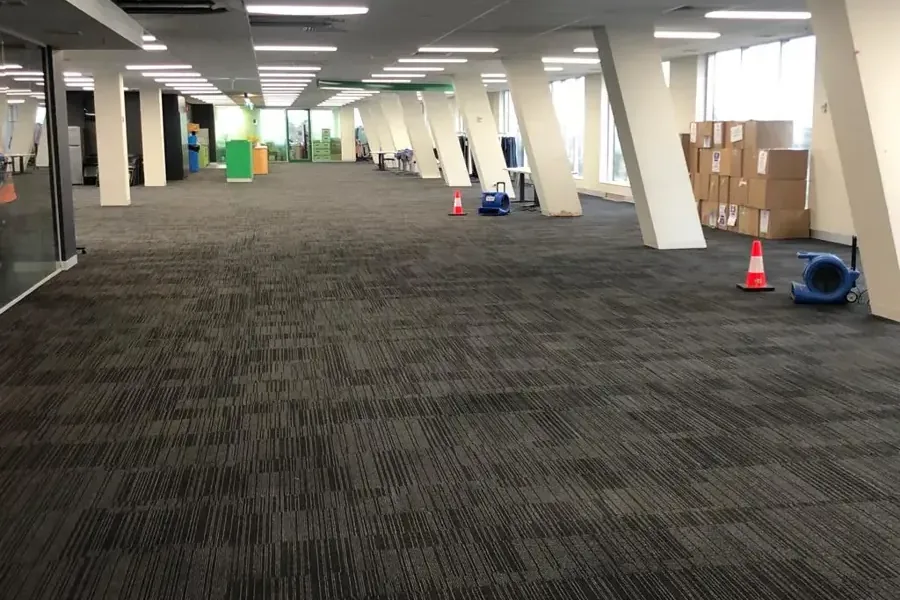
A water loss in a shop or restaurant stops sales the moment the floor is wet. On Pioneer Boulevard in Artesia, where storefronts fill the corridor known as Little India and downtown has been rebuilt, the first day decides how long the doors stay closed.
Key takeaways
- Stop the source, make the space safe and call for extraction before water reaches stock or equipment.
- Photograph the damage and list wet inventory before anything is moved or thrown out.
- Commercial extraction and drying run in zones, so part of the business can often stay open.
- Shared walls and mixed use buildings mean water can reach neighbors and units above or below.
- Moisture readings, not appearance, decide when a space is dry enough to rebuild.
First steps when water hits a storefront
The first moments of a commercial water loss are mostly about stopping the source and protecting people. The source decides what comes next.
A kitchen or restroom failure is the usual cause, but a roof leak or a neighboring unit can send water in too.
Acting early matters because water extraction is much easier before water soaks into flooring, wall bottoms and stock.
If the water is dirty or smells of sewage, everyone stays out of the area until a cleanup crew in protective gear has handled it.
- Shut off the water at the main or the fixture valve.
- Switch off power to wet areas if the panel is dry and safe to reach.
- Move stock, paper records and electronics onto shelves or tables.
- Keep customers and staff off wet floors and away from any sewage.
- Photograph the damage and the wet inventory.
- Call an extraction crew and notify the landlord or property manager.
What makes a Pioneer Boulevard storefront different
Shared walls and mixed use buildings
Downtown Pioneer Boulevard was rebuilt through the city's Downtown Improvement Project. The Arkansas Street Specific Plan changed the zoning of parcels along Arkansas Street and Pioneer Boulevard to allow mixed use.
Mixed use buildings put different tenants under one roof. A restaurant leak can stain the ceiling of the unit below, and a roof leak can run through several storefronts.
Kitchens, restrooms and sewer backups
Food businesses add hoses, drains and equipment that retail shops do not have, and every one of them can fail.
- Dishwashers, prep sinks and ice machines add hoses and drains.
- A backed up floor drain is a sewage loss, not a simple spill.
- Restroom overflows spread into hallways and neighboring suites.
- Coolers and refrigeration units can leak at the base.
Protecting stock and equipment
Inventory loses value fast once it is wet, and equipment that stays wet can fail. A few early moves save a lot of cost later.
Separating wet items from dry ones also makes the list of losses easier to write.
- Lift stock off the floor onto shelving or tables.
- Cover dry inventory with plastic sheeting.
- Move paper records and electronics out of the wet area first.
- Keep wet and dry items apart and label each pile.
- Check coolers and refrigerated stock for temperature changes.
How commercial extraction and drying work
Commercial water damage work starts with the same basics as a home loss: stop the source, extract, then dry. The scale is larger, with bigger pumps, more equipment and more kinds of flooring.
Tile, vinyl, sealed concrete and carpet tile each dry differently. The crew tests each surface and decides whether to dry it in place or lift it.
Wet drywall is cut above the height the water wicked, then dried or replaced. Equipment goes where readings show water, not only where damage is visible.
- Large extractors remove standing water from open floors.
- Carpet tile and pad are lifted where they trapped water.
- Drywall is opened at the base where water wicked up.
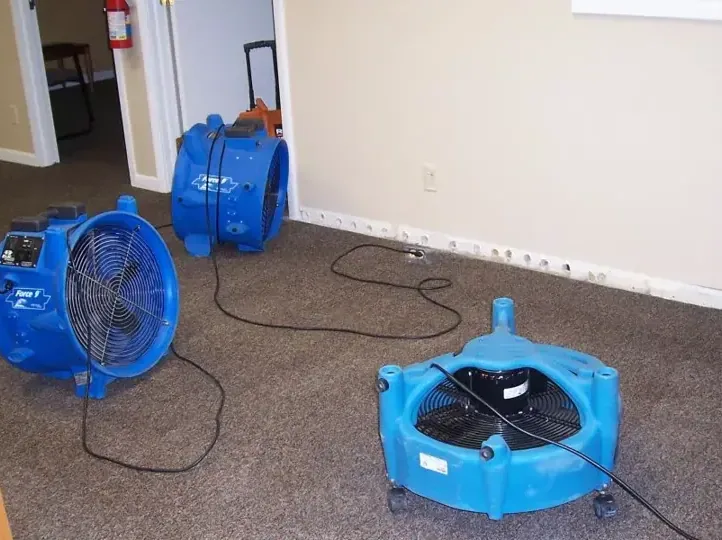
- Dehumidifiers are sized to the whole space, not a single room.
- Readings are logged on every affected surface.
Keeping the doors open
Many shops cannot close for a week. Zoned work lets the crew seal the wet area behind plastic sheeting and keep other parts of the space usable.
Evening and early morning schedules keep noise away from customers, and equipment is placed to keep aisles and exits clear.
Customers who can see a clean, open entrance tend to come back. A short sign that explains the work, and a clear path to the counter, keeps trust while the crew finishes.
- Containment around the wet zone.
- Work scheduled around opening hours where possible.
- Stock moved to dry areas or off site.
- Exits and aisles kept clear for safety.
Records for the owner and the landlord
A water loss in a rented space involves the tenant and the landlord, and the paper trail matters to both. Clear records speed up every conversation.
Tenants should read the lease to see who handles interior finishes and who handles building repairs.
A single folder, on paper or on a phone, that holds every photograph and receipt saves hours later when the landlord and the contractors ask for details.
- Photographs, with dates, of every wet room.
- A list of damaged stock and equipment.
- Moisture readings and drying logs.
- Names and contact details of everyone notified.
- Copies of invoices for repairs and cleanup.
Day two, drying and reopening
After the first day, the work settles into a routine of drying and checking. Equipment runs around the clock, and readings are taken on each visit.
The crew can usually say which areas read dry and which still need time. Partial reopening is often possible once a zone passes its readings.
A space is ready to rebuild when readings reach the dry standard, not when it looks dry. Rebuilding over damp drywall or flooring invites trouble later, and structural drying is judged by readings for exactly that reason.
Food businesses should confirm what is needed before reopening after a sewage or major water loss.
- Daily readings on floors, walls and ceilings.
- Equipment adjusted as zones dry.
- A short list of what is removed and what stays.
- A rebuild plan that follows the dry readings.
Questions
Can a shop stay open during water damage cleanup?
Often part of it can. Containment and zoned drying keep the wet area separate while other areas stay usable.
Who handles repairs in a rented storefront?
It depends on the lease. Interior finishes and building repairs are often split between tenant and landlord, so the lease and the property manager are the first stops.
What if the leak came from the unit above?
The source is photographed and reported to the property manager, and the cleanup goes ahead while responsibility is sorted out. The water still has to be extracted and dried.
Is a backed up floor drain a sewage loss?
Yes. Water from a sewer backup is contaminated, and porous materials it touched are removed and bagged.
How is the space judged dry?
Moisture meters check floors, walls and ceilings against a dry standard, and the equipment stays until every reading passes.
How can a business owner reach the landlord quickly?
A written message right away starts the record, and a call follows when the matter is urgent. The property manager can also coordinate work on shared walls, roofs and drains.