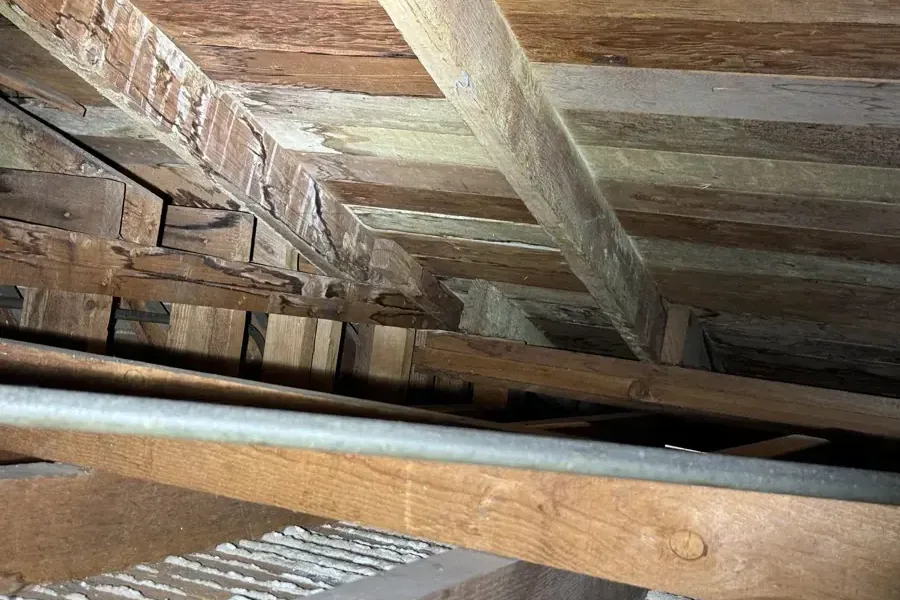
A brown ring on the ceiling after days of rain is easy to ignore until it grows. In La Palma, where about 80.9 percent of housing units are single family homes, that stain is often the first sign that water has traveled through the roof, the attic or a pipe.
Key takeaways
- A stain that grows during rain and stops growing when the weather clears usually points to the roof.
- A stain that keeps growing in dry weather often points to a pipe above the ceiling.
- Regional storms such as Tropical Storm Hilary in August 2023 and the early February 2024 atmospheric river show how much rain Southern California roofs can face.
- Wet attic insulation and ceiling drywall usually come out, because they dry slowly and hold water above a room.
- The roof repair and the ceiling drying are two jobs that work best when planned together.
Why a stain after rain needs a closer look
Rain does not need a flood to find a way in. A cracked flashing, a lifted shingle or a clogged gutter can send water into the attic, where insulation soaks it up and passes it to the ceiling below.
Southern California has seen heavy rain in recent years. Tropical Storm Hilary in August 2023 was the first tropical storm to hit the region in 84 years, and in early February 2024 a slow moving atmospheric river brought days of heavy rain.
Both were regional events, and the same kind of rain tests every roof in the city.
- Cracked or lifted roofing.
- Failed flashing around vents and chimneys.
- Clogged gutters and downspouts.
- Worn sealant where pipes and vents pass through the roof.
Roof, attic or pipe: reading the stain
Signs of a roof leak
A roof leak follows the weather. The stain appears or spreads during rain and often dries to a ring between storms.
- The stain grows during or just after rain.
- The edge forms a brown or yellow ring.
- The stain sits below a roof edge, a vent or a chimney.
- Attic insulation is damp or matted above the stain.
- Water drips only during a storm.
Signs of a pipe leak
A pipe leak ignores the weather. The stain keeps growing on dry days, and it usually sits near a bathroom, kitchen or air handler above.
- The stain grows in dry weather.
- The stain sits below a bathroom, laundry or kitchen.
- Dripping can be heard after the rain has stopped.
- The water bill rises with no change in use.
First steps when a ceiling is wet
A ceiling that sags or bulges is holding water. Keep people and furniture out from under it, and do not poke at it while anyone is nearby.
Put a bucket under any drip and move belongings out of the room if possible. Photograph the stain from the start.
Cover the floor under the stain with plastic or old sheets, since drips and chunks of wet drywall can fall without warning.
- Move furniture and rugs away from the spot.
- Place a bucket under drips and empty it often.
- Turn off power to a ceiling light or fan that is wet.
- Mark the edge of the stain in pencil to track its growth.
- Call a roofer for the source and a drying crew for the water.
What the drying crew checks above the ceiling
Water that stains a ceiling has usually soaked insulation and framing first. The crew checks the attic or the joist bays, not just the visible spot.
A thermal camera and moisture meters map the wet area. For a ceiling leak water damage job, wet insulation comes out because it dries slowly and keeps pushing water downward.
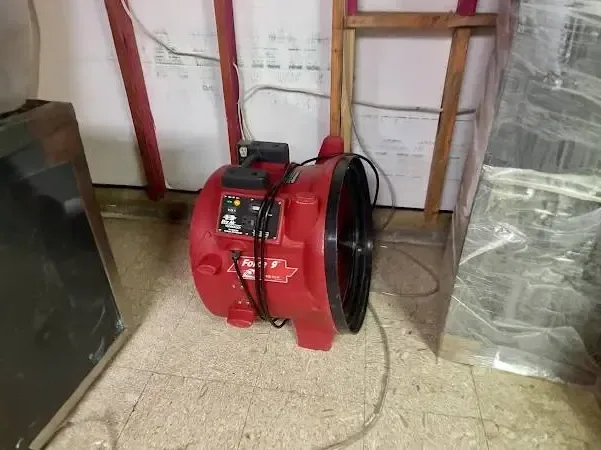
Drying equipment in the room below pushes dry air into the opened ceiling, while dehumidifiers pull moisture from the framing. The attic is checked again as readings improve.
- Moisture readings in ceiling drywall and framing.
- A thermal camera scan to find hidden wet spots.
- Wet insulation removed from the attic.
- Drywall opened where it has sagged or stayed wet.
What gets replaced and what dries
Ceiling drywall that has sagged, softened or stained through usually has to be replaced. Drywall that is only damp can often be dried in place with air movers and dehumidifiers.
Paint and texture are matched after the structure is dry, so the finish repair is the last step and not the first.
Structural drying runs until readings reach the dry standard in the drywall and framing, and new insulation goes in last.
Roof and attic checks a homeowner can make safely
A few minutes with a flashlight tells a lot, and none of it needs a ladder on a wet roof. Stay off the roof in or after rain, and leave the climbing to a roofer.
From the ground, scan the roof edge, the vents and the gutters. From the attic hatch, look at the underside of the roof deck and the insulation near the stain.
- Dark stains or wet wood on the underside of the roof deck.
- Insulation that is damp, matted or discolored.
- Daylight showing around a vent or chimney.
- Gutters that are packed with leaves or pulling away.
- Lifted, cracked or missing roofing from the ground view.
Timing the repair around the weather
A roofer fixes the source, and the repair often waits for a dry stretch. A temporary cover can keep water out in the meantime.
Drying and roof repair are separate jobs. A roof leak water damage response handles the water inside while the roofer handles the opening outside.
The best plan is to start drying right away and schedule the roof work for the first dry window. A wet ceiling should not wait for the next storm.
Questions
How can a homeowner tell if a stain is old or new?
A new stain is often damp or soft to the touch and may have a sharp edge. An old stain is dry and may show a faded ring, but it can darken again with the next storm.
Does a ceiling stain after rain always mean the roof needs replacing?
No. Many leaks come from one small failed spot such as flashing or a sealed vent. A roofer can tell whether it is a repair or something larger.
Is a brown stain dangerous?
The color comes from dirt and materials that the water carried down. The bigger concern is that water has stayed in the ceiling, so drying should start promptly.
Should wet insulation be left to dry?
Usually not. Wet insulation dries slowly and keeps moisture against the drywall, so it is typically removed.
How long does ceiling drying take?
It depends on how much water reached the framing and drywall. Readings taken each day decide when the work is finished.
Is it safe to use a room with a stained ceiling?
A small, dry stain is usually fine, but a ceiling that sags, drips or feels soft is holding water and should be kept clear. Avoid ceiling fans and lights tied to a wet area until they are checked.