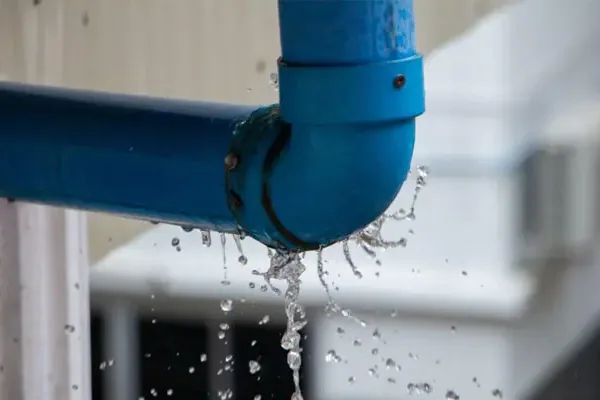
A burst pipe can spread water across a floor quickly, and every extra minute the main valve stays open adds to the loss. For most Cerritos homes, the city says the main shutoff is the valve just below the hose faucet in front of the house.
Key takeaways
- For most Cerritos homes, the main water shutoff is the valve just below the hose faucet in front of the house.
- The city says to turn it clockwise to close it and to test it from time to time.
- Closing the main valve stops new water, but standing water still needs extraction.
- A moisture check of walls and floors decides what can dry in place and what must come out.
- Most homes date from the 1960s and 1970s, so valves, fittings and fixtures carry years of use.
Where the main shutoff sits in Cerritos
The city advises that for most Cerritos homes, the main shutoff is the valve just below the hose faucet in front of the house. Turning it clockwise closes it.
The city also suggests testing the valve periodically. A valve that has never been turned can stick, or leak at the stem, when it is finally needed.
Finding it before an emergency is the whole point. A burst pipe is a bad moment to hunt through a yard.
- Walk to the front of the house and find the valve below the hose faucet.
- Turn it clockwise to close it, gently and fully.
- Open a faucet inside to confirm the water has stopped.
- Reopen the valve and note which way it turned.
- Show everyone in the household where it is.
The first steps when a pipe bursts
Stop the water
The main valve comes first. After that, small steps keep the loss from growing.
- Close the main shutoff at the front of the house.
- Open a faucet at the lowest point to drain what is left in the pipes.
- Turn off the water heater if hot water is involved.
- Switch off power to wet areas only if the panel is dry and safe to reach.
Limit the spread
Pull up rugs, lift small furniture and move electronics out of the wet zone. Towels at doorways slow water from reaching dry rooms.
Photograph the broken pipe, the wet floor and the walls before cleanup begins.
Why older fittings deserve a look
American Community Survey estimates for 2014 to 2018 show 53.0 percent of homes were built from 1970 to 1979 and 29.8 percent from 1960 to 1969. About 82.8 percent of housing units are single family detached homes.
Homes with that much service life have valves, fittings and fixtures that have worked for decades. Any of them can fail, and a visible drip at a fitting is a reason to act.
The average household has about 3.25 people, so showers, laundry and dishes keep supply hoses and valves working every day. Wear builds up quietly, and a failure often happens with no warning.
The city says its own water and sewer pipes and equipment are over 50 years old and need repairs or replacement. That statement is about the city system, not the plumbing inside any one home.
- Supply hose connections at toilets and sinks.
- Washer hoses and their shutoff valves.
- Fittings near the water heater.
- Angle stops under sinks and vanities.
What the extraction crew removes first
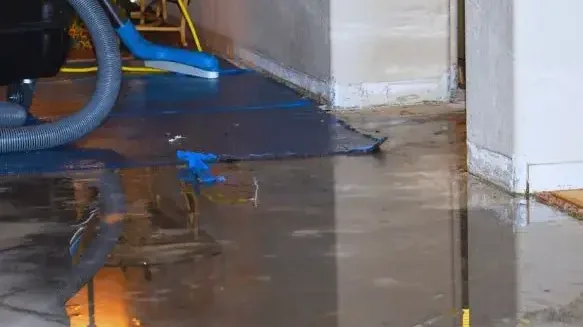
Water extraction starts as soon as the water is off, so floors and wall bottoms spend less time wet. Standing water is pumped or vacuumed out.
Carpet pad that soaked through is usually pulled, while the carpet itself may be lifted and dried or replaced depending on the readings.
Hardwood and laminate are checked for cupping and swelling, and tile is checked for water that ran under it. Flooring that cannot dry in place is lifted before it warps.
- Standing water removed from floors.
- Wet pad and soaked insulation pulled out.
- Baseboards removed to let wall bottoms release moisture.
- Drywall opened where readings show water inside.
Drying and checking the walls
Moisture meters and a thermal camera map where the water traveled, including wall cavities that look dry from outside. Structural drying then uses air movers and dehumidifiers until every reading reaches the dry standard.
A pipe that breaks inside a wall can wet the cavity above and below the break. The crew follows the readings instead of the stain.
In a two story home, a burst pipe upstairs can wet the ceiling, the walls and the floor below. Water follows gravity, so rooms under the break are checked as well as the room where the pipe failed.
- Moisture meters on floors and wall bottoms.
- Thermal camera scans of walls and ceilings.
- Air movers and dehumidifiers placed by the readings.
- Daily logs until the dry standard is met.
A household plan for water emergencies
Know every shutoff
The main valve is the last resort, and smaller valves can stop a leak without cutting water to the whole house. Locating them ahead of time saves a scramble.
- Angle stops under sinks and behind toilets.
- The valve behind the washer.
- The cold water inlet at the water heater.
- The main valve in front of the house.
Share the plan
Everyone old enough to turn a valve should know where the main is and which way it turns. A quick walk through once a year keeps the memory fresh.
Closing the main valve before a long trip limits the damage if a hose fails while nobody is home.
After the plumber finishes
Once the pipe is repaired, the water goes back on and the drying work continues. Flooring, drywall and paint return only after readings are dry.
A repair that closes up a wet wall invites trouble later, so the burst pipe water damage work and the plumbing repair are best scheduled together.
Receipts for the plumbing repair and the cleanup, kept with the photographs taken at the start, give a clear record of the loss from beginning to end.
Questions
Where is the main water shutoff in a Cerritos home?
The city advises that for most homes it is the valve just below the hose faucet in front of the house. Turn it clockwise to close it.
How often should the main valve be tested?
The city suggests testing it periodically. A short test confirms that it turns easily and shuts off the water.
What if the valve will not turn?
Do not force it with tools. Call a plumber, and use the shutoff valves at individual fixtures to limit the water in the meantime.
Does a burst pipe always mean wet walls?
Not always, but it is common. Moisture readings show whether water reached wall cavities or stayed on the floor.
How long does drying take?
It depends on how much water spread and what it reached. Readings taken each day decide when drying is finished.
Should the main valve be closed when the household travels?
Closing it limits the damage if a hose or fitting fails while nobody is home. The valve can be reopened on return, after a quick check for drips.