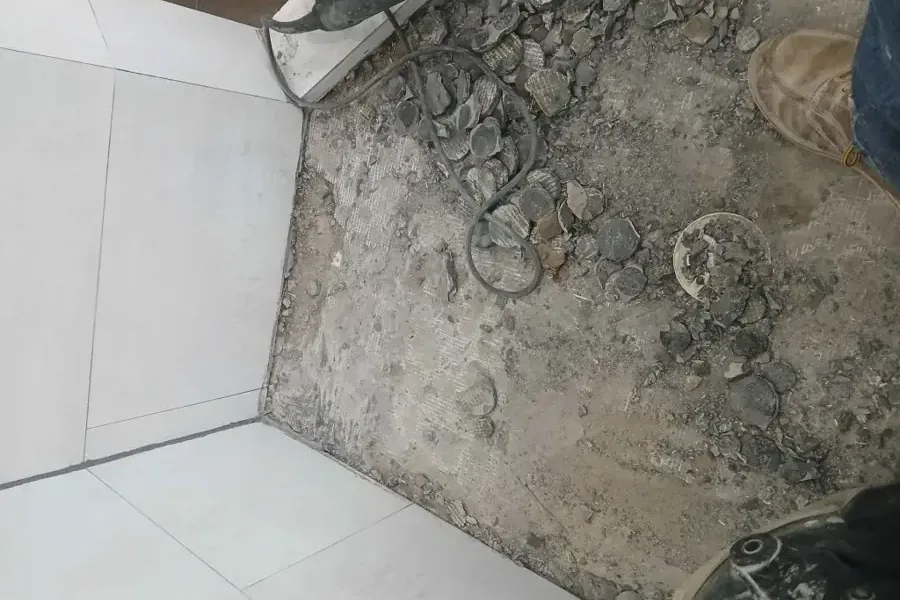
A slab leak starts as a pinhole in a copper water pipe that runs under or through the concrete floor, and it can drip for weeks before a stain appears. In Cypress, where one and two story tract homes sit on slabs and no basement catches the water, the first clues show up at the floor, the baseboards and the water bill.
Key takeaways
- Copper water pipes under or through the slab can develop pinhole leaks, and the hot side tends to show trouble first.
- Cypress homes sit on concrete slabs with no basements, so slab leak water rises into flooring and wall bottoms.
- A warm patch on the floor, the sound of running water and a moving water meter with every fixture off are the classic signs.
- Closing the main water valve stops new water while a plumber locates the leak.
- Wet flooring and wall bottoms still need extraction and drying with moisture readings after the pipe is fixed.
Why slab leaks come up in Cypress
Cypress was built out over several decades, and the housing mix shows it. The city's 2021 to 2029 Housing Element puts the median home year at 1971.
Copper water pipes run under or through those slabs. A pinhole can open at one spot in a pipe, and the hot side tends to leak first.
That mix explains why slab leaks are a regular topic for homeowners. The numbers behind it are listed here.
- Median home built in 1971.
- About 39 percent of homes built in the 1960s.
- About 29 percent of homes built in the 1970s.
- Mostly one and two story tract homes on concrete slabs, with apartments and condos too.
Signs of a slab leak
Signs inside the home
Water under a slab rarely announces itself. It shows up as small changes that are easy to dismiss.
Some of these signs overlap with ordinary wear, so two or more together tell more than any one alone.
- A warm or hot spot on the floor, often on tile or hardwood.
- The sound of running or hissing water when every fixture is off.
- Baseboards that swell, stain or pull away from the wall.
- Carpet that feels damp or smells musty.
- Flooring that lifts, cups or cracks at the seams.
- A water heater that runs more often with no change in use.
Signs at the meter and on the bill
The water meter gives the quickest answer. Close every faucet, stop the washer and the ice maker, then watch the meter dial or leak indicator for movement.
A meter that keeps turning with nothing running points to a leak somewhere between the meter and the fixtures.
- A dial or indicator that moves with everything off.
- A water bill that climbs with no change in habits.
- Low hot water pressure at one or more fixtures.
First steps when a slab leak is suspected
Speed matters because water under a slab keeps moving. A few quick steps limit the damage before the plumber and the extraction crew start work.
When water is visible at the floor, the extraction crew can begin removing it while the plumber works on the pipe. Waiting for the repair before removing water leaves the slab and wall bottoms wet for longer.
- Shut off the main water valve to stop new water.
- Keep power off in damp rooms and stay out of standing water near outlets.
- Lift small furniture and rugs off wet flooring.
- Photograph the floor, the baseboards and the meter reading.
- Call a plumber for leak detection, and an extraction crew if water is visible.
What water does in a slab home
Concrete is porous, and water under a slab moves through cracks, joints and slab edges. From there it rises into carpet pad, wood flooring, cabinet bases and the bottom of drywall.
Without a basement, the water has nowhere to drain. The rooms above the leak take the damage, and the longer the materials stay wet, the less likely they are to dry in place.
A hot water leak adds warmth and humidity as well, which can make a room feel muggy before any stain shows. That is one reason a warm floor deserves attention.
After 24 to 48 hours of constant moisture, flooring and wall bottoms start to break down and mold can begin to grow.
- Carpet and pad wick water outward from the leak.
- Hardwood cups and buckles as it absorbs moisture.
- Laminate swells at the seams and rarely recovers.
- Drywall pulls water upward from the floor.
- Cabinet bases swell and the finish lifts.
How the drying team works after the plumber
Removing what cannot dry in place
Once the leak is found, the crew extracts standing water and lifts wet carpet and pad. Flooring that has swollen or come apart is removed so the slab can release its moisture.
Baseboards and the lowest section of drywall come out when readings show water inside the wall bottom.
Drying the slab and the walls
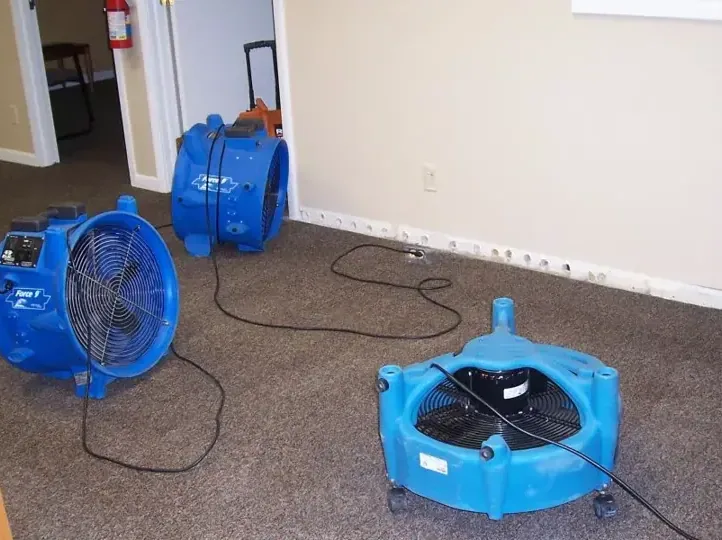
Moisture meters map the slab edges, wall bottoms and cabinet bases so the plan reaches the whole wet area. Dehumidifiers and air movers then pull water out of the concrete and the framing.
The goal is a dry standard on every reading, which is how structural drying is judged complete.
- Air movers push dry air across the floor.
- Dehumidifiers lower the moisture in the room.
- Readings are taken daily on the slab, walls and cabinets.
- New flooring goes in only after dry readings.
Choosing the repair path
A plumber decides whether to repair the pinhole where it sits or reroute the pipe. Both options can mean cutting into the floor, so the plan for the cut and the plan for drying need to match.
Rerouting a pipe above the slab usually means new runs through walls or ceilings, with patching afterward. A spot repair keeps the existing path but needs access to the exact leak.
A slab leak water damage job usually has two tracks running together, the plumbing repair and the drying. Closing the floor before readings are dry traps moisture and sets up a second round of damage.
- Is the leak on the hot side or the cold side?
- Where will the floor or slab be cut?
- How long will the area stay open?
- When can the flooring go back?
Questions
How can a homeowner tell a slab leak from a surface leak?
A surface leak has a visible source such as a hose, fixture or appliance. A slab leak has none, and the clues are a warm floor spot, the sound of water and a meter that moves with everything off.
What does a warm spot on the floor mean?
It can mean a hot water pipe is leaking under the slab. Hot side pinholes tend to show first, so a warm patch deserves a meter check and a call to a plumber.
Does a slab leak mean the whole floor comes out?
Usually not. The plumber finds the leak, and only wet materials around it are removed. Moisture readings show how far the water traveled.
How long does drying take after a slab leak?
It depends on how long the leak ran and what the floor is made of. Concrete and thick materials dry slowly, so daily readings decide when the work is finished.
Should the main water valve be closed right away?
Yes. Closing it stops new water while the cause is traced, and it can be reopened once the plumber finishes the repair.
Can a slab leak be handled while the household stays home?
Often yes, although air movers and dehumidifiers are loud and some rooms may be closed off. The plumber and the drying team can usually sequence the work so one or two rooms stay usable.