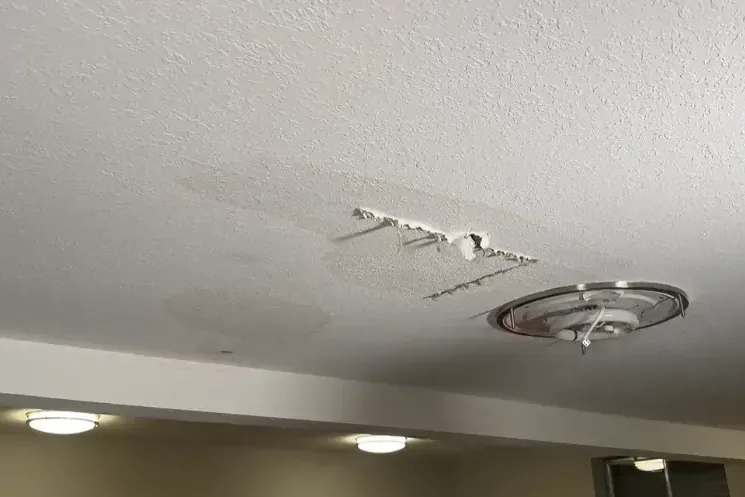
An air conditioner pulls moisture out of the air, and that water is meant to leave through a small drain. When the drain clogs, the water backs up into a pan, overflows and finds a way into a Cypress ceiling or hallway.
Key takeaways
- Attic and closet air handlers each have a condensate drain, and a clog or a rusted pan can send water into the home.
- An attic unit usually wets the ceiling below, while a closet unit sends water across the floor into the hallway and nearby rooms.
- Stains below an attic unit, a tripped safety switch or water around a closet unit are the main warning signs.
- Turn the system off at the thermostat when a leak is found, so it stops making more water.
- Wet ceiling insulation and flooring need extraction and drying with readings, even if the stain looks small.
How an air handler makes water
Cooling air removes humidity, and the water collects in a pan under the coil. A condensate drain carries it away from the unit.
A float switch is a small safety device in the pan or the drain. It is meant to shut the unit off when water rises, and a stuck switch lets the overflow run.
Many tract homes have air handlers in the attic or in a closet. Either spot can fail the same way, because the drain clogs, the pan rusts or the safety switch fails.
The climate adds to the workload. Cypress sits on a semi arid coastal plain, and a system that runs through warm spells makes a steady stream of water.
- A clogged drain from algae and sludge.
- A rusted or cracked drain pan.
- A disconnected or sagging drain pipe.
- A safety switch that fails to shut the unit off.
Attic units versus closet units
Attic air handlers
Water from an attic unit soaks insulation first, then the ceiling drywall. The stain often shows in a hallway or bedroom ceiling, and it may not sit directly under the unit.
Attic units sit above ceilings that were never meant to hold water, so drywall can sag long before a stain turns brown.
- A brown stain on a ceiling below the attic unit.
- Bulging or sagging drywall.
- Damp or matted insulation near the unit.
- Dripping sounds in the attic.
Closet air handlers
Water from a closet unit runs out under the door and across the floor into hallways and bedrooms. Cypress homes sit on slabs with no basements, so water spreads across flooring instead of draining down.
- Water or rust stains on the closet floor.
- Damp baseboards and carpet near the closet.
- A musty smell near the unit.
- Standing water in the secondary pan.
Warning signs before an overflow
A condensate problem often gives notice. The system may shut down on its own, or a pan may show water that should not be there.
- The air conditioner stops or cycles on and off with no clear cause.
- Water in the secondary pan or around the unit.
- A hissing or gurgling sound at the drain.
- Ceiling stains that appear after the system runs.
- Rust on the pan or on nearby metal.
Why a small stain can mean a big loss
By the time a ceiling stain shows, the insulation above it has often been wet for days. Water spreads sideways through insulation and along framing before it finds a spot to drip.
A closet unit works the same way at floor level. Water wicks into baseboards and the bottom of drywall before the carpet feels wet.
Because condensate keeps running whenever the system runs, the amount of water adds up. A slow drip can become a soaked ceiling over a few warm weeks.
- Insulation holds water and passes it on slowly.
- Drywall wicks moisture upward from a wet floor.
- Wet materials begin to break down after 24 to 48 hours.
- A hidden leak keeps growing while the system runs.

First steps when the drain overflows
Turning off the system stops new water. Cleaning up the water comes next, and that is where an extraction crew helps.
The drain should be cleared before the system restarts. If it is not, the same overflow repeats the next time the unit runs.
- Turn the system off at the thermostat and the breaker.
- Remove standing water with towels or a wet vacuum.
- Place a bucket under any ceiling drip.
- Keep people away from a sagging ceiling.
- Photograph the unit, the pan and the damage.
- Call an air conditioning technician for the drain and an extraction crew for the water.
What the drying team removes and dries
AC and condensate leak cleanup starts with extraction and moisture mapping. Wet insulation in an attic is removed, because it holds water against the ceiling.
In a closet loss, the crew lifts baseboards and dries the wall bottoms and flooring. A leak that reached a ceiling may need drywall cut out and dried, which is the work of ceiling leak water damage crews.
A hallway floor near a closet unit gets the same care as a bathroom after a supply leak. The crew checks the slab edge and the wall bottoms, not only the carpet.
- Wet insulation removed from the attic.
- Ceiling drywall dried or replaced.
- Flooring and pad extracted near a closet unit.
- Baseboards lifted so wall bottoms can dry.
- Daily moisture readings until everything is dry.
Preventing the next overflow
A technician can flush the drain, check the pan and test the safety switch. A yearly check is simple compared with a ceiling replacement.
A homeowner can help by keeping the area around the unit clear, so a drip or a stain gets noticed early.
A drain that has clogged once is likely to clog again, so a repeat problem is a reason to ask about a drain redesign or a float switch.
- Flush the drain on a regular schedule.
- Check the pan and the safety switch each season.
- Keep the area around the unit clear and visible.
- Replace a rusted pan before it leaks.
Questions
What is a condensate drain?
It is the small pipe that carries water from the air conditioner's coil pan to a safe place. When it clogs, the pan overflows.
Can a clogged drain really damage a ceiling?
Yes. A pan that overflows in an attic soaks insulation and ceiling drywall, and the damage can spread before a stain appears.
Should the air conditioner stay on during a leak?
No. Turning it off at the thermostat stops new water while the drain and pan are checked.
How can a homeowner tell condensate water from a roof or pipe leak?
Condensate leaks follow the air conditioner, not the rain. The stain grows when the system runs and stays still when it is off.
Is condensate water clean?
It is not drinking water, and it can carry algae and dirt from the drain pan. A prompt cleanup and drying keep the damage down.
How often should the condensate drain be flushed?
A technician can set a schedule based on the system and its use. Many homeowners add the drain to a seasonal check so it never gets forgotten.